
What specific qualifications or certifications should a professional conducting pallet racking safety checks possess?
A professional conducting pallet racking safety checks should have recognised inspection training, practical experience with warehouse racking systems and a sound understanding of BS EN 15635, the relevant UK guidance and manufacturer requirements. Look for documented competence, suitable risk-assessment training and, where applicable, certification such as SEMA-approved rack inspector training, supported by regular refresher training and hands-on experience.
A professional carrying out pallet racking safety checks should have recognised inspection training, relevant practical experience and a sound working knowledge of warehouse racking systems. They should understand BS EN 15635, applicable UK health and safety guidance, manufacturer requirements and the principles of risk assessment. A qualification such as SEMA-approved Rack Inspector training is a useful indicator of formal competence, but the certificate should be supported by current experience and regular refresher training.
There is no single universal legal certificate that automatically qualifies someone to inspect every warehouse racking installation. Under UK health and safety law, the employer must ensure that inspections are completed by a competent person. Competence means having the appropriate combination of knowledge, training, practical ability and experience to identify defects, assess their significance and recommend proportionate action.
When selecting an inspection professional, check for the following qualifications and capabilities:
- Recognised inspection training: The inspector should have completed a structured course covering warehouse racking safety checks, common damage mechanisms, safe working practices, inspection methods and reporting. SEMA-approved Rack Inspector training is widely recognised as relevant specialist training in the UK.
- Knowledge of BS EN 15635: The inspector should understand the European standard for the use and maintenance of warehouse racking, including the roles of the user, person responsible for racking safety and racking inspector.
- Practical warehouse racking experience: Experience with different systems, components, load configurations and operating environments helps an inspector distinguish cosmetic wear from damage that could affect structural capacity or stability.
- Understanding of manufacturer information: Inspection findings need to be considered against the original design, safe working loads, component specifications and installation requirements wherever those records are available.
- Risk-assessment training: The inspector should be able to classify defects, explain the potential consequences and set out suitable controls, such as isolating a damaged bay, reducing the load or arranging an urgent repair.
- Accurate reporting skills: A competent inspector should produce a clear report that identifies the location and type of defect, records its severity, includes supporting photographs where appropriate and sets out recommended actions.
- Current competence: Regular refresher training and ongoing practical work are important because standards, equipment, working practices and inspection expectations can change.
A safety check is not simply a visual walk-through. The inspector should be able to examine frames, beams, bracing, protection, baseplates, fixings, decking and other relevant components, while also considering overloading, impact damage, poor housekeeping, unauthorised alterations and changes to the way the warehouse racking is being used. They should understand when an issue can be managed through prompt repair and when the affected area must be immediately unloaded or taken out of service.
It is also important to distinguish between a routine expert inspection and specialist design or structural engineering work. A trained warehouse racking inspector can identify visible damage, unsafe conditions and maintenance requirements. Where the installation has suffered significant impact, has been altered, lacks design information or presents a complex structural concern, the matter may need to be referred to a suitably qualified structural engineer or the original system designer.
Before appointing an inspector, ask to see evidence of relevant training, practical experience, insurance and a sample inspection report. Confirm that the person understands the particular warehouse racking systems in use and can provide evidence of a suitable inspection process. The quality of the findings and recommendations matters as much as the title of the qualification.
For existing customers, keeping inspection records, defect photographs, repair evidence and training details together provides a useful audit trail. It also helps the responsible person demonstrate that warehouse racking safety checks are being completed by suitably competent professionals and that identified risks are followed through to resolution.
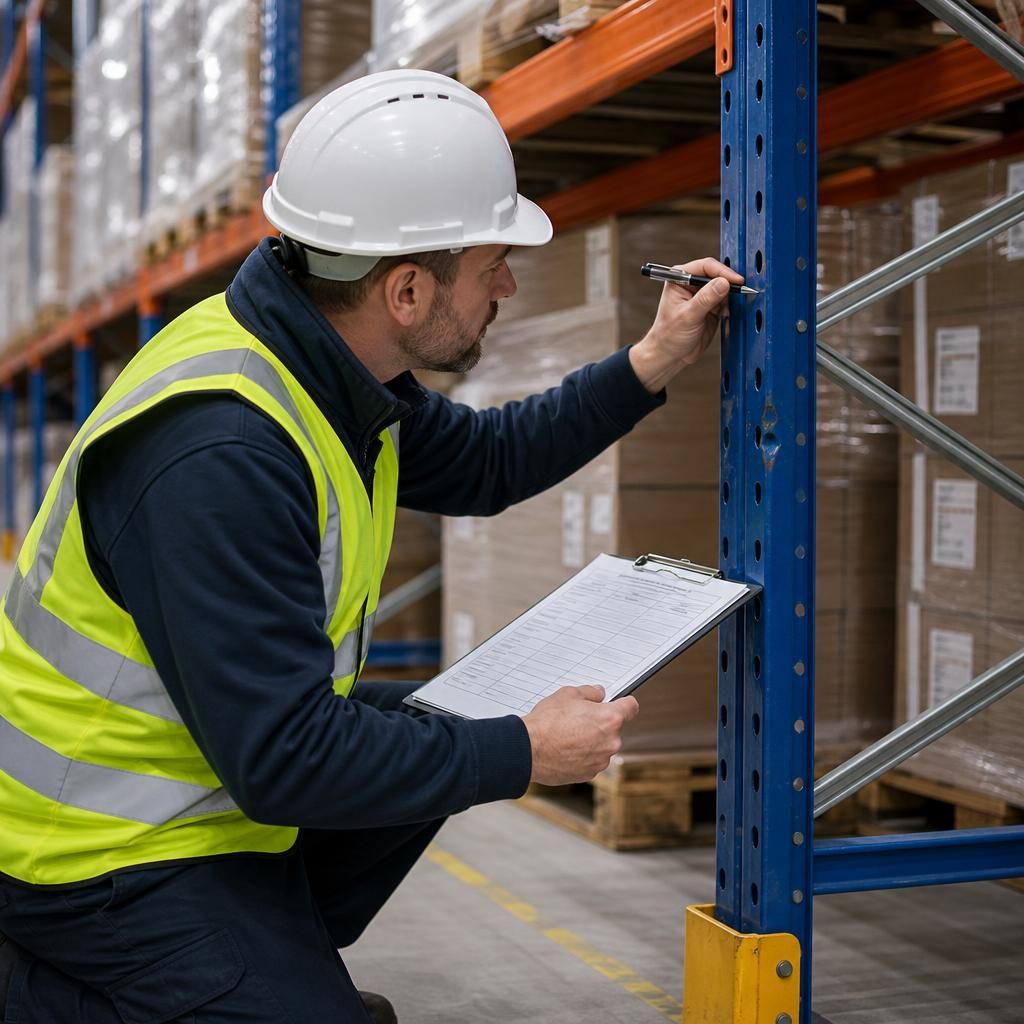
A qualified pallet racking safety inspector should combine recognised inspection training with practical experience of warehouse racking systems. SEMA-approved Rack Inspector training and knowledge of BS EN 15635 are useful indicators, but competence also depends on the inspector’s ability to identify damage, assess risk and recommend appropriate action.
Ask to see evidence of current training, relevant experience, insurance and clear reporting procedures. A reliable inspection report should identify each defect, explain its significance and state whether the affected area needs monitoring, repair, unloading or immediate isolation.
Book a Qualified Pallet Racking Safety Check
Arrange a qualified pallet racking safety check with Able Racking to confirm your warehouse racking is safe, compliant and properly maintained. Contact our experienced inspection team to book a suitable appointment.