
How do mezzanine lift systems improve warehouse safety?
Mezzanine lift systems improve warehouse safety by moving goods between levels in a controlled, enclosed manner, reducing manual carrying, lifting and the use of unsuitable access equipment. When correctly specified, installed and maintained, they also support safer traffic flow, reduce handling risks and help prevent dropped loads.
Mezzanine lift systems improve warehouse safety by transferring goods between levels in a controlled, enclosed or guarded process. They reduce the need for people to carry loads on stairs, use unsuitable access equipment or work near open edges, while helping prevent dropped goods, collisions and unsafe manual handling.
The safety benefits depend on selecting the correct system, integrating it properly with the building and operating it in accordance with the manufacturer’s instructions. A lift is not a substitute for a suitable risk assessment, competent installation or regular inspection.
- Reduced manual handling: Operators can move heavy, awkward or repetitive loads between levels without carrying them on stairs or lifting them by hand. This can reduce the likelihood of strains, crush injuries and loss of balance.
- Protection from falls: Lift landing gates, interlocked doors, guarding and enclosed travel areas help prevent people from stepping into the lift shaft or falling from an open platform. The system should be arranged so that access gates cannot be opened when the platform is not safely positioned.
- Lower risk of dropped loads: A suitable platform, retaining edges and correctly positioned goods help keep loads secure during movement. The lift should never be overloaded, and goods should be stable, within the designated platform area and suitable for the equipment.
- Safer movement between levels: A dedicated goods lift separates vertical goods transfer from pedestrian routes. This can reduce congestion on stairs and walkways, particularly where materials are moved frequently or where loads obstruct a person’s view.
- Less reliance on unsuitable equipment: Using a purpose-designed lift avoids the unsafe practice of moving goods on passenger stairways, makeshift platforms or equipment intended only for access. Any forklift or other handling equipment used to load the lift must also be suitable for the task and controlled carefully.
- Clearer operating controls: Fixed controls, emergency stop devices, audible or visual warnings and defined loading procedures make the process more predictable. Controls should be positioned to prevent unauthorised operation and to give operators a clear view of the loading area where practicable.
Good system design is central to these benefits. Before installation, the intended loads, dimensions, frequency of use, landing arrangements, available headroom and surrounding traffic should be assessed. The design should also consider whether goods will be moved on pallets, stillages, cages or other handling units, and whether the lift is intended solely for goods rather than people.
Guarding is particularly important around the platform and shaft. Access points should have suitable gates or doors, and the arrangement should prevent a person or load from entering the travel path unexpectedly. Where the lift opens onto a raised working level, the landing should have appropriate edge protection and enough space for loading and unloading without forcing operators to stand close to an unprotected edge.
Safe loading procedures are equally important. Operators should know the maximum rated load, how it must be distributed and which goods are unsuitable. Loads should not project through the gates, interfere with moving parts or obstruct warning signs and controls. Loading and unloading areas should be kept clear, with pedestrian and vehicle routes identified and managed to avoid contact with the platform or its users.
Training should cover normal operation, pre-use checks, safe loading, gate operation, emergency stops, reporting faults and what to do if the platform stops between levels. People should not attempt to force open gates, climb into the shaft or recover goods from an immobilised platform. A rescue procedure should be available, and only authorised, competent personnel should deal with breakdowns or access to restricted areas.
Regular inspection and preventive maintenance help preserve the safety features that protect users. Checks should include gates and interlocks, guarding, controls, emergency stops, warning devices, platform condition, chains or other lifting components, hydraulic or electrical systems and signs of damage or abnormal operation. Any defect that could affect safe use should be reported immediately, and the equipment should be taken out of service where necessary until it has been assessed and repaired.
UK employers must ensure that work equipment is suitable, maintained and used by people who have received adequate information, instruction and training. The applicable legal duties can include the Provision and Use of Work Equipment Regulations and, depending on the equipment’s design and lifting function, the Lifting Operations and Lifting Equipment Regulations. The precise requirements depend on the type of lift, its use and how it is installed, so the system should be assessed against the manufacturer’s instructions and the relevant current standards rather than treated as a generic platform.
Documentation supports continued compliance and safe operation. Keep the installation information, operating instructions, risk assessment, examination records, maintenance history, training records and details of any modifications together. Changes to the lift, landing arrangements or the surrounding structure should be reviewed before work begins, as an alteration can affect guarding, access, loading and the original safety assessment.
In practice, a mezzanine lift system is safest when it forms part of a wider control plan: suitable equipment, protected landings, controlled traffic routes, competent users, planned maintenance and clear emergency arrangements. Able Racking can help identify operational risks, coordinate safety checks and advise on suitable inspection and maintenance arrangements so that the lift continues to support safe goods handling throughout its working life.
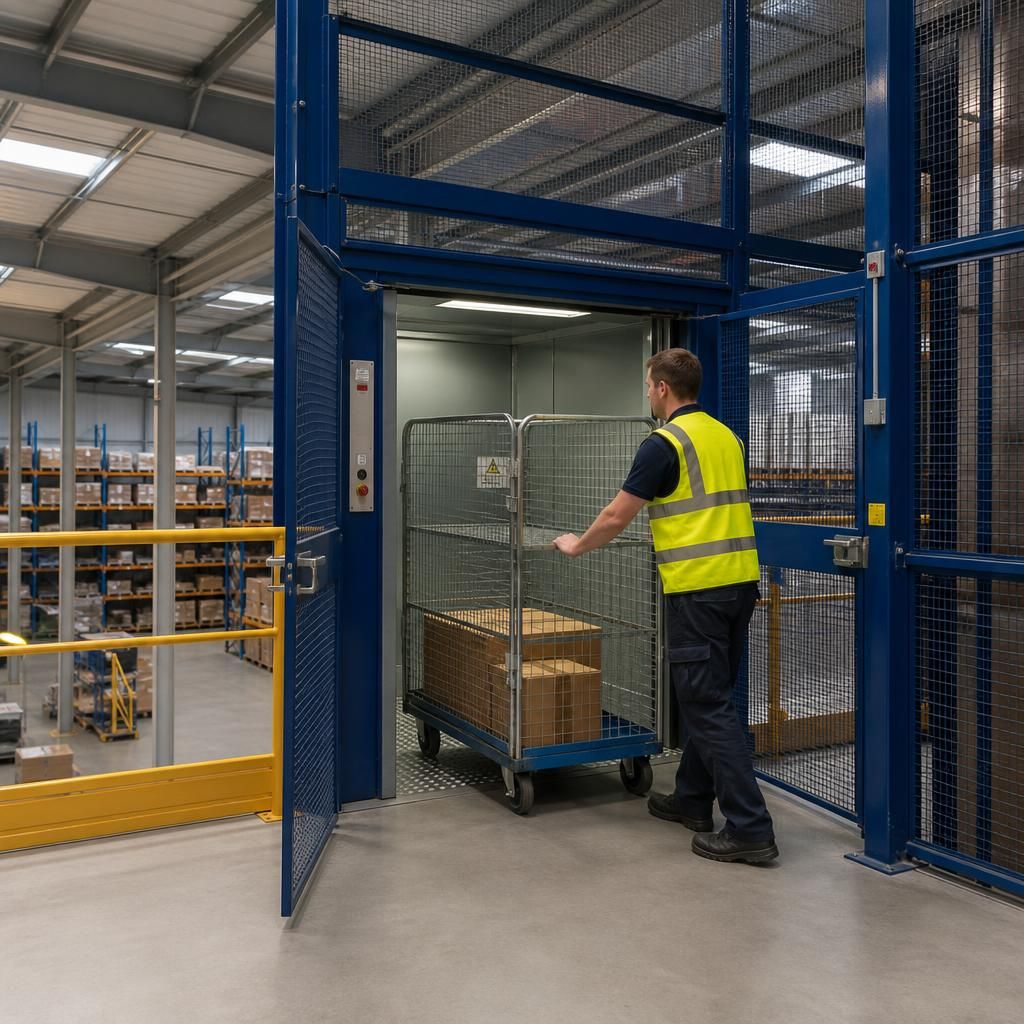
A mezzanine lift system improves safety by moving goods between levels through a controlled, guarded route rather than requiring people to carry loads near stairs or open edges. Protected lift landings, access gates and interlocks help prevent falls into the shaft and restrict access while the platform is moving.
Safety also depends on keeping the landing clear and providing enough space to load and unload without placing operators close to an unprotected edge. Goods should remain stable, stay within the platform area and never obstruct gates, controls or warning signs. Operators must be trained to use the gates correctly and should never enter the shaft or attempt to recover goods from a platform that has stopped.
Arrange a mezzanine lift safety assessment
Arrange a mezzanine lift safety assessment to review guarding, landing access, controls, loading arrangements and maintenance requirements. Contact Able Racking to discuss the checks your system and operators need.