
What are the key indicators of pallet racking structural damage that can compromise safety?
Key indicators of pallet racking structural damage include bent or twisted frames, displaced or loose beams, damaged connections, missing components, corrosion, and impact damage to uprights or bracing. Any visible deformation or deterioration should be reported and assessed by a competent professional before the affected warehouse racking is used again.
Key indicators of pallet racking structural damage include bent or twisted uprights, distorted bracing, displaced beams, damaged connections, missing components, corrosion and evidence of impact. Any visible deformation, looseness or deterioration can reduce the system’s designed load-carrying capacity and should be reported immediately. The affected warehouse racking should be isolated from use until it has been assessed by a competent person.
Damage is not always obvious from a distance. A frame can appear generally upright while an upright, brace, beam connector or anchor has been weakened. Regular checks should therefore combine careful visual inspection with an understanding of how the warehouse racking is designed, loaded and used.
Deformed or damaged uprights
Uprights are the vertical members that transfer loads through the frame to the floor. Look for dents, bends, twists, buckling, splits, tears around connection points and damage to the upright profile. Impact from handling equipment is a common cause, particularly at lower levels, but damage can occur at higher levels if loads are placed incorrectly or items fall against the frame.
Paint loss, scraped metal and fresh marks may indicate a recent impact. A small-looking dent should not be dismissed, as damage close to a connection, baseplate or brace may affect the stability of the complete frame. Uprights that are no longer straight or that lean away from their original alignment require prompt professional assessment.
Distorted, loose or displaced beams
Beams should sit level and fully engaged with their connectors. Warning signs include a beam that has dropped, lifted, twisted, bowed or moved from its original position. Gaps at beam connections, damaged locking pins, incomplete engagement and connectors that have pulled away from the upright can indicate that the beam is not securely supported.
Beam damage may result from overloading, impact, incorrect installation or repeated movement of pallets. A visibly bent beam should not be straightened or returned to service without an appropriate assessment. Welding, heating or makeshift repairs can change the properties of the steel and may invalidate the original design assumptions.
Damaged bracing and frame components
Horizontal and diagonal bracing helps maintain the geometry and stiffness of a racking frame. Check for bent, buckled, cracked or detached braces, damaged bolts, missing fixings and open or distorted connection points. A missing brace can allow the frame to move laterally and may place additional stress on other components.
Baseplates, shims, anchors, safety locks, row spacers, pallet supports and other specified components should also be present, secure and suitable for the installation. Removing a component to make space for a pallet or replacing it with an unapproved alternative can compromise the system even when the main uprights and beams appear undamaged.
Signs of impact or movement
Impact damage may be shown by scrapes, gouges, fresh paint transfer, buckled steel, displaced pallets or damage to nearby floor fixings. Check the surrounding area as well as the visibly affected member. An impact can loosen an anchor, shift a frame, damage a connector or affect adjacent bays without leaving an obvious mark on every component.
Changes in alignment are also important. Frames, beams and runs should remain in the positions established during installation. Leaning frames, uneven beam lines, unusual gaps between connected sections or movement when loads are placed or removed should be investigated rather than monitored informally.
Corrosion, cracking and deterioration
Rust, flaking coatings, pitting and other corrosion can reduce the effective thickness of steel. Pay particular attention to areas exposed to moisture, condensation, chemicals or damaged protective coatings, including around floor level and connections. Cracks, tears and sharp changes in the shape of a component require immediate attention.
Corrosion should not simply be covered with paint. The extent, location and depth of the deterioration need to be established, and the component may require repair or replacement in accordance with the manufacturer’s requirements and the applicable design information.
Overloading and loading-related warning signs
Structural damage can develop or become more likely when loads exceed the stated capacity or are distributed incorrectly. Warning signs include bowed beams, visibly deflected members, overloaded pallets, pallet overhang, damaged pallets, concentrated loads and load notices that are missing, unclear or inconsistent with the actual arrangement.
Load limits apply to the specific configuration of the warehouse racking. Changing beam levels, frame layout, pallet dimensions, support arrangements or handling methods can alter the allowable capacity. Loads should be checked against the current configuration and the relevant load notices, not against an assumption based on a similar-looking installation.
Floor and anchoring concerns
The condition of the floor and its connection to the racking system are part of the structural assessment. Look for cracked or damaged concrete around anchors, loose or missing anchor fixings, lifted baseplates, settlement, uneven surfaces and evidence that frames have moved. Water ingress or chemical damage may also affect the floor or fixings.
Do not tighten, move or re-anchor components without suitable technical guidance. Corrective work must preserve the intended alignment and connection strength of the installation.
What to do when damage is found
- Stop using the affected bay or area and prevent further loading or unloading where this could worsen the damage.
- Keep people and handling equipment clear if there is a risk of collapse, falling materials or further impact.
- Do not remove damaged components, unload them without considering stability or attempt an improvised repair.
- Report the location, visible damage, likely cause and any relevant load or impact information to the responsible warehouse manager.
- Arrange an assessment by a suitably competent warehouse racking inspector or structural specialist.
- Follow the written repair, replacement and reinspection instructions before returning the area to service.
Photographs can help record the condition and location, but they do not replace an inspection. The assessment should consider the complete bay, connected frames, loads, floor fixings, protection measures and any previous damage or repairs. Where the condition is unsafe or uncertain, the area should remain out of use until a competent person confirms that it is suitable.
Routine user checks help identify new damage between formal inspections, while a planned professional inspection provides a more systematic review of the installation. Findings should be recorded, prioritised and closed out so that reported damage is not left unresolved. Effective preventative maintenance protects people, preserves the performance of the warehouse racking and helps demonstrate that safety responsibilities are being managed properly.
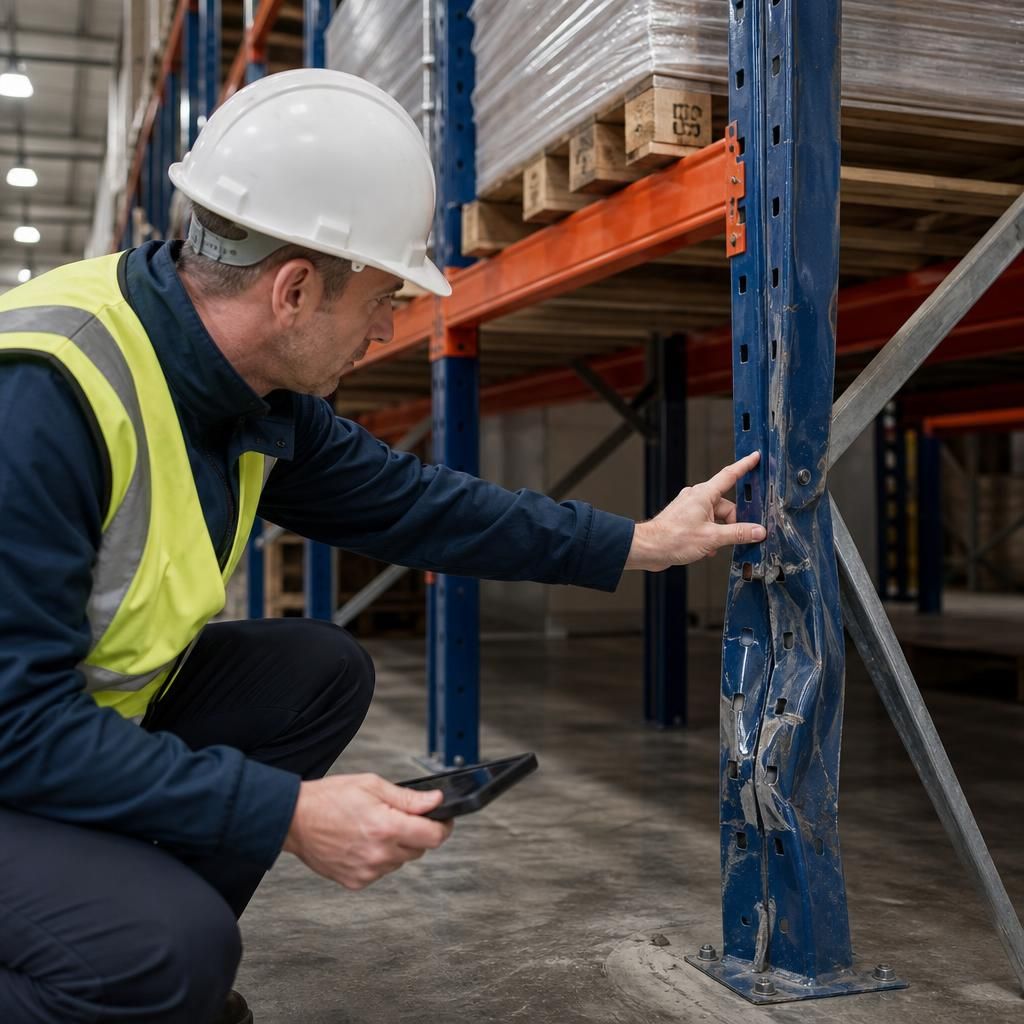
Impact damage to warehouse racking can compromise the stability of more than the visibly marked component. A collision may bend an upright, loosen an anchor, displace a beam connection or transmit force to adjacent bays, even when the damage appears minor.
Isolate the affected bay from loading and unloading, keep people and handling equipment clear, and report the location and likely cause. Do not straighten, weld or replace components without suitable technical guidance. A competent inspection should assess the complete frame, connected sections, fixings, loads and surrounding floor before the warehouse racking is returned to service.
Arrange a professional pallet racking inspection
Arrange a professional pallet racking inspection with Able Racking to assess suspected damage, confirm the condition of your warehouse racking and identify any required corrective work.