
What are the most common potential hazards that pallet rack inspections help identify? Pallet rack inspections identify hazards such as damaged uprights, beams or braces, overloaded or incorrectly positioned loads, missing safety components, unstable pallets, inadequate clearances and signs of impact that could compromise warehouse safety and compliance.
Pallet rack inspections help identify hazards including damaged uprights, beams or braces, overloaded or incorrectly positioned loads, missing safety components, unstable pallets, inadequate clearances and impact damage. Inspectors also check for defects that could reduce warehouse racking stability, compromise compliance or increase the risk of falling loads and collisions.
Pallet rack inspections identify defects and unsafe conditions that could cause collapse, falling loads, collisions or restricted access. The most common hazards include damage to uprights, beams and bracing; overloaded or incorrectly positioned loads; missing protection; unstable pallets; insufficient clearances; poor housekeeping; and changes to the warehouse racking system that have not been properly assessed.
A competent inspection considers both the physical condition of the installation and the way it is being used. Inspectors look for visible damage, signs of movement, deterioration and unsafe operating practices, then record findings so that appropriate action can be prioritised.
- Damaged uprights, frames and bracing: Forklift impacts can bend, dent or twist upright columns and damage horizontal or diagonal braces. Even damage that appears minor can reduce the frame’s load-carrying capacity and stability. Inspectors check for distortion, cracked welds, loose connections, missing components and signs that a frame has moved from its original position.
- Damaged or displaced beams: Beams may be bent, dented, incorrectly seated or inadequately secured. A damaged beam can affect the support provided to stored loads and may become detached if its locking arrangement is missing or compromised. Inspections also identify uneven beam levels and alterations that do not match the approved configuration.
- Impact damage: Contact from handling equipment is a frequent source of warehouse racking damage, particularly at aisle ends, corners and lower-level components. Inspectors assess the extent and location of impact damage, including damage to guards, frames, beams, bracing and floor fixings. Areas with repeated impact may also indicate a need to review traffic routes, visibility or operating practices.
- Overloaded storage positions: Loads that exceed the stated capacity of a bay, beam level or complete installation can overstress components. Inspectors compare the installation and its load notices with the loads being stored, where this information is available. They also look for concentrated loads, uneven weight distribution and goods stored in positions for which the system was not designed.
- Incorrectly positioned loads: Pallets that are not fully supported, are placed too close to the edge or project into an aisle can become unstable. The inspection checks whether pallets are centred correctly, supported by the required beams or decking, and stored with suitable spacing. Loads that overhang, lean or contact adjacent items may present a falling-object risk.
- Unstable, damaged or unsuitable pallets: Broken boards, missing blocks, poor-quality pallets and damaged load carriers can cause goods to shift or fall. Inspectors look for pallets that are unsuitable for the beam spacing, incorrectly orientated or carrying loads that are not secured. The condition of the goods themselves is relevant where packaging failure could affect stability.
- Missing or ineffective safety components: Inspections identify missing beam locks, damaged column guards, absent back protection, inadequate end protection and defective pallet supports where these are required by the design or risk assessment. Components must be correctly fitted and suitable for the installation; their presence alone does not confirm that they provide adequate protection.
- Inadequate clearances: Insufficient space between loads, beams, frames, ceilings, lights, sprinklers, doors and vehicle routes can increase the risk of collision or obstruct emergency and operational access. Inspectors assess whether stored goods and handling equipment can be used safely without contacting the structure or nearby services.
- Unsecured or poorly fixed installations: A pallet racking installation may become unsafe if floor anchors are loose, missing or damaged, or if the floor and baseplates are not providing adequate support. Inspections can also identify movement, settlement, damaged shims and changes to the building or floor that may affect stability.
- Unauthorised alterations: Removing beams, changing beam levels, adding components or modifying the layout can alter the design assumptions and load capacity. An inspection helps identify configurations that differ from the available design information, load notices or installation records. Any proposed change should be assessed and approved before it is put into use.
- Falling-object and access hazards: Loose goods, poor stacking, projecting items and unprotected stored materials can fall into aisles or onto people. Inspectors also look for blocked walkways, obstructed escape routes, damaged flooring and conditions that prevent safe access for operators and maintenance personnel.
- Corrosion, deterioration and poor maintenance: Rust, moisture damage, damaged finishes and general deterioration can weaken components over time. Poor housekeeping may conceal defects, obstruct inspections or increase the likelihood of vehicle impact. Maintaining clean, accessible aisles supports both safe operation and effective ongoing checks.
Inspection findings are normally categorised according to their severity and the action required. A serious defect may require the affected area to be unloaded, isolated or taken out of service immediately. Less serious issues should still be recorded, monitored and corrected within an appropriate timescale. Repairs must be carried out using suitable components and by competent personnel; damaged parts should not simply be straightened, welded or altered without a proper assessment.
Regular user checks are also important because damage can occur between formal inspections. Warehouse staff should report impacts, unstable loads, missing components and other changes promptly, rather than waiting for the next scheduled visit. Keeping inspection reports, repair records, load information and details of approved alterations together provides a clear history of the installation and helps demonstrate that identified hazards are being controlled.
A pallet rack inspection therefore does more than identify visibly bent metal. It evaluates whether the warehouse racking remains suitable for its design, condition and current use, helping prevent small defects from developing into more serious safety or compliance issues.
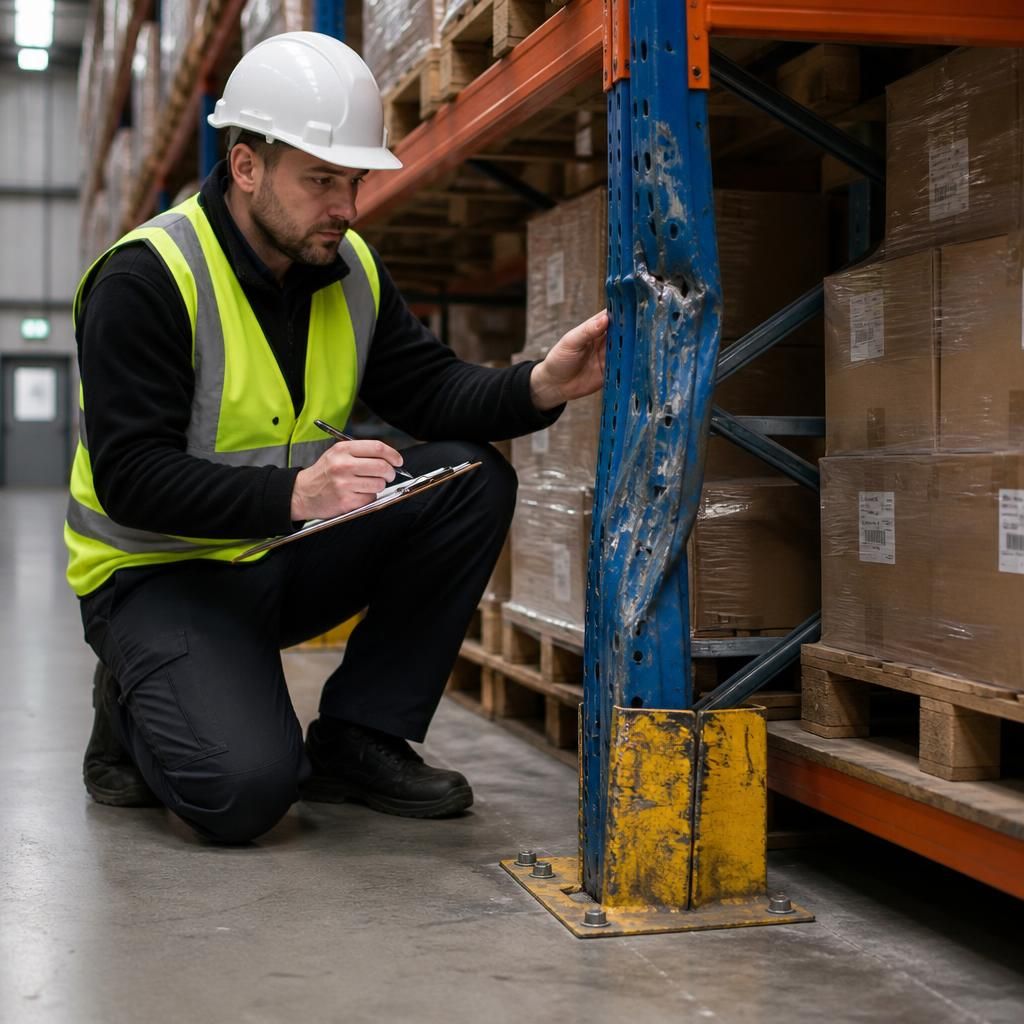
Forklift impact damage is one of the most important hazards identified during pallet rack inspections. Dents, bends or twists in uprights, braces, beams and floor fixings can reduce the stability and load-carrying capacity of warehouse racking, even when the damage initially appears minor.
Inspectors assess the location and severity of each defect, check for movement or displaced components, and identify areas where repeated impacts may indicate problems with traffic routes or operating practices. Serious damage may require the affected bay to be unloaded or isolated until a competent repair assessment has been completed.
Book a pallet rack inspection to identify potential hazards
Book a pallet rack inspection to identify potential hazards before they lead to falling loads, collisions or costly disruption. Able Racking can assess your warehouse racking and provide clear recommendations for prioritised corrective action.