
What are the key differences in cost between new and used warehouse racking?
New warehouse racking usually has a higher upfront purchase cost, while used warehouse racking can be cheaper initially but may require inspection, repairs, replacement components and additional compliance work. The better-value option depends on the system’s condition, specification, installation requirements and expected service life, rather than purchase price alone.
New warehouse racking generally has the higher purchase price, while used warehouse racking may offer a lower initial cost. However, the final cost difference depends on condition, specification, availability, transport, installation, inspection, repairs and expected service life. A lower purchase price does not automatically make used warehouse racking the more economical option.
Initial purchase cost
New warehouse racking is manufactured to an agreed specification, so the price normally reflects the required dimensions, load capacity, finish, configuration and components. You are paying for a system that has not previously been exposed to operational damage, modifications or unknown loading conditions. New systems may also be available with manufacturer documentation and warranty support, depending on the supplier and products selected.
Used warehouse racking is often cheaper because the main structural components have already been purchased and used elsewhere. The price can vary considerably according to the age, condition, brand, quantity and availability of the equipment. A complete, compatible system in good condition may provide useful savings, whereas mixed or incomplete stock may require additional components before it can be safely installed.
Specification and design costs
New warehouse racking can be designed around the building, available floor area, access routes, handling equipment, stock dimensions and required load capacities. This can reduce the need for compromises during installation. Design work, site surveys and technical calculations may be included in a project quotation or charged separately.
With used warehouse racking, the available components may determine the design rather than the other way around. Additional design time may be needed to check whether the frames, beams, connectors and accessories are compatible and suitable for the intended loads. If the system does not match the building or operational requirements, adapting it can reduce or eliminate the apparent saving.
Inspection and compliance costs
Used warehouse racking should be assessed before purchase and again after installation. A competent inspection can identify bent frames, damaged beams, missing locking devices, corrosion, unsuitable alterations and other defects that may not be obvious from photographs or a basic visual check. Any inspection, testing, documentation or remedial work adds to the total cost.
New warehouse racking is not maintenance-free or automatically compliant simply because it is new. It must still be correctly designed, installed, protected and operated, with suitable documentation and ongoing inspections. Nevertheless, new equipment usually presents fewer condition-related uncertainties at the point of purchase.
Repairs and replacement components
Used warehouse racking may need replacement beams, frame sections, footplates, locking pins, guards or other components. Components should not be mixed solely because they appear to fit. Their dimensions, materials, load ratings and compatibility need to be verified. If original parts are unavailable, sourcing suitable replacements can increase both the cost and the installation time.
New warehouse racking is less likely to need immediate remedial work, although damage during delivery or installation must still be addressed. Purchasing a complete new system can also make it easier to source matching components in the future, particularly where the manufacturer continues to support the product range.
Transport, handling and installation
Delivery and installation costs can apply to both options. Used warehouse racking may be dismantled, stored or located at a different site, creating extra loading, transport and handling requirements. It may also arrive in mixed batches that take longer to identify and assemble.
Installation labour is not necessarily cheaper for used warehouse racking. Operatives may need additional time to sort components, check for damage, resolve discrepancies and make adjustments. Safe installation also requires the system to be assembled to the correct layout, secured appropriately and checked before use. These requirements apply regardless of whether the equipment is new or used.
Operating and maintenance costs
The ongoing cost of warehouse racking includes routine visual checks, formal inspections, housekeeping, damage reporting, repairs and replacement components. Used warehouse racking may require closer attention if its history is incomplete or if it has already experienced wear and operational impacts. This does not mean that every used system is unsuitable, but its condition and maintenance history should be established as far as possible.
New warehouse racking may offer more predictable maintenance costs during its early service life. It can still be damaged by handling equipment, overloaded, altered incorrectly or poorly maintained, so regular inspections and prompt repairs remain essential. Preventative maintenance is generally less disruptive and less expensive than allowing damage to develop into a wider safety or operational issue.
Warranty and risk allowance
New warehouse racking may be supplied with warranty terms covering specific products or defects, subject to the supplier’s conditions. Warranty does not usually cover damage caused by impact, overloading, incorrect installation or unauthorised alterations. Used warehouse racking may have limited warranty protection or be sold without warranty, which means more of the condition and performance risk remains with the buyer.
When comparing quotations, allow for the cost of investigating faults, arranging replacement parts and dealing with possible delays. These are not guaranteed costs, but they are relevant when assessing the financial risk of a used system. A slightly higher initial price for a well-specified new system may be justified where predictable delivery, documentation and support are important.
How to compare the total cost
Compare both options using the full project cost rather than the equipment price alone. A useful assessment should include:
- the purchase price of frames, beams and accessories;
- site surveys, design checks and load assessments;
- delivery, unloading, storage and handling;
- installation, dismantling or alterations;
- inspection and compliance checks;
- repairs, replacement components and protective equipment;
- warranty coverage and likely future support;
- ongoing inspection and maintenance requirements; and
- the expected service life and future flexibility of the system.
For example, used warehouse racking that requires extensive repairs, additional bracing, replacement components and a separate inspection may have a similar or higher installed cost than a new system. Conversely, good-quality used equipment that is complete, compatible and professionally assessed may provide genuine value where the layout is straightforward and the remaining service life is appropriate.
Practical decision
Choose new warehouse racking when you need a specific design, predictable condition, current documentation, longer expected service life or stronger manufacturer support. Used warehouse racking may be suitable when the components can be traced and inspected, the load requirements are known, the system is compatible with the site and the total installed cost remains favourable after all remedial work is included.
The most reliable comparison is a like-for-like quotation based on a verified layout and load requirement. Before committing to used equipment, arrange a competent inspection and confirm that any defects, missing parts and installation requirements have been costed. This approach helps distinguish a genuine saving from a lower purchase price that creates additional safety, compliance or maintenance costs later.
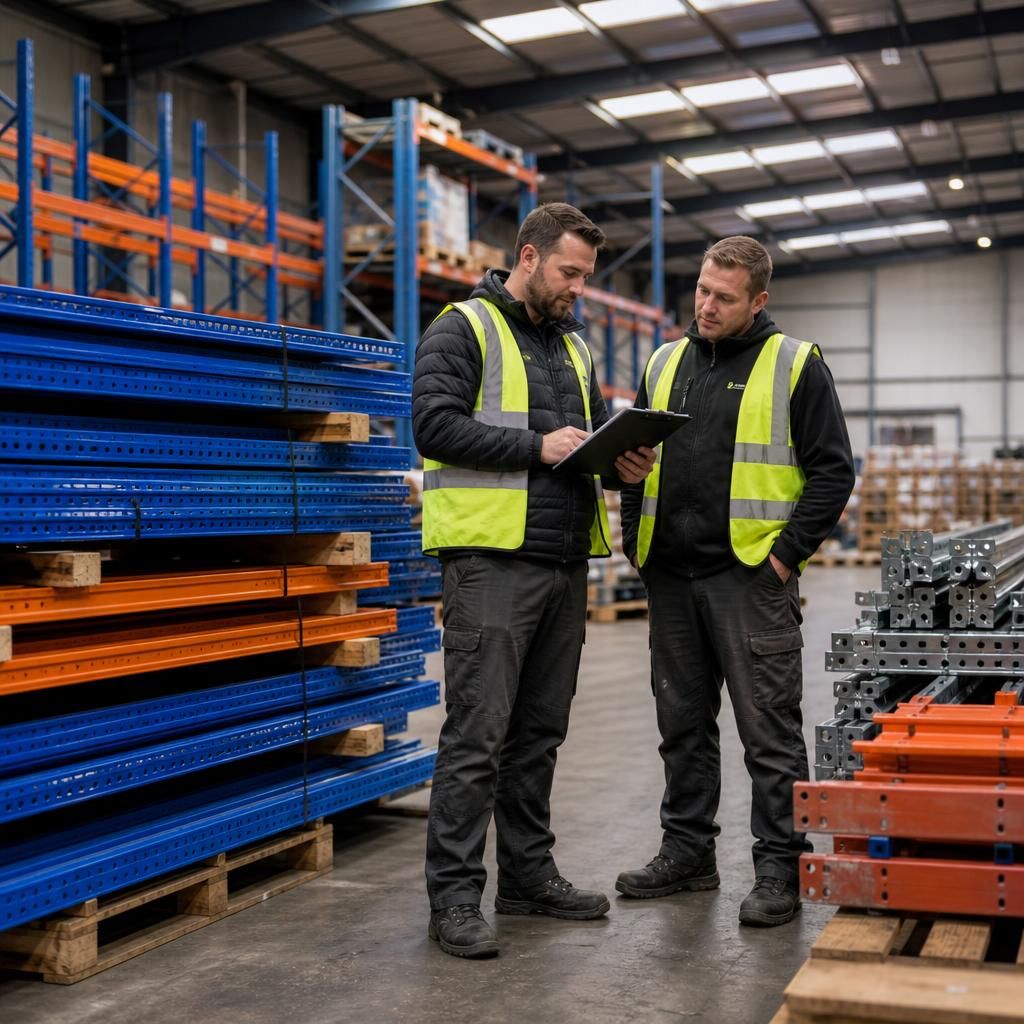
The most useful cost comparison between new and used warehouse racking is the total installed cost, not the purchase price alone. Used warehouse racking may appear cheaper initially, but inspection, replacement components, transport, sorting, installation and remedial work can reduce or remove the saving.
Before choosing an option, compare quotations that include:
- the required frames, beams, accessories and protection;
- design checks, site surveys and load assessments;
- delivery, unloading, storage and handling;
- installation and any alterations;
- inspection, documentation and compliance work; and
- anticipated repairs, maintenance and future component availability.
Good-quality used warehouse racking can provide genuine value when it is complete, compatible with the proposed layout, suitable for the intended loads and professionally inspected. New warehouse racking may justify its higher initial cost where predictable condition, tailored design, warranty support and a longer expected service life are important. A like-for-like quotation based on a verified layout gives the clearest indication of which option offers better value.
Get Expert Advice on New and Used Warehouse Racking Costs
Ask Able Racking to compare the full installed cost of new and used warehouse racking, including inspection, installation, repairs and ongoing support. Our experienced team can help you assess the condition, specification and compliance requirements before you commit.