
What are the key benefits of professional warehouse racking installation?
Professional warehouse racking installation improves storage safety, space efficiency and system performance by ensuring the layout, components and fixings are correctly selected and installed. It also supports compliance with relevant safety requirements, reduces the risk of installation defects and provides a reliable foundation for ongoing inspections and maintenance.
Professional warehouse racking installation improves safety, storage efficiency and long-term system performance. A competent installation team assesses the intended use, checks the suitability of the layout and components, follows the manufacturer’s instructions, and installs the structure to the required specification. This reduces avoidable defects and provides a reliable basis for inspection, maintenance and future changes.
Improved workplace safety is the most important benefit. Warehouse racking carries substantial loads, so incorrect assembly, missing components, unsuitable fixings or poor alignment can create avoidable risks. Professional installers understand how frames, beams, bracing, protection and anchors should be fitted. They can also identify practical hazards such as inadequate clearances, vulnerable aisle ends, restricted access routes and potential conflicts with handling equipment.
A professional installation should include checks that the finished system reflects the approved design and the intended loading. This includes confirming beam positions, frame spacing, upright protection, floor conditions, anchoring and the visibility of load information. Where site conditions differ from the original plans, an experienced installer can raise the issue before it affects safety or performance.
Better use of available space is another significant advantage. Installation is not simply a matter of assembling components. The layout must work with building dimensions, access doors, lighting, fire precautions, pedestrian routes, loading areas and the equipment used to move goods. Accurate setting out helps make the most of the available footprint without creating obstructed aisles or unsafe operating conditions.
A well-planned layout can improve stock accessibility and support a more logical flow of goods. It may reduce unnecessary travel for warehouse operatives, make product locations easier to manage and help separate pedestrian and vehicle movements. These benefits depend on the system being designed and installed for the actual operation rather than being treated as a generic fit-out.
Correct installation protects the system’s designed capacity. Warehouse racking components work as a structural system, and their performance depends on correct assembly and configuration. Professional installers check that compatible components are used, connections are properly engaged, bracing is fitted correctly and fixings are installed in accordance with the specification. They also avoid unauthorised alterations that could affect the load capacity or stability of the structure.
This is particularly important where the system will be loaded and unloaded regularly, used with mechanical handling equipment or adapted as storage requirements change. A professional team can explain which changes require approval and which components or configurations must not be substituted without technical review.
Professional installation supports workplace compliance. Employers have responsibilities to provide and maintain safe work equipment and safe working areas. A correctly installed system, supported by suitable design information and inspection records, helps demonstrate that reasonable controls have been put in place. Installation does not by itself guarantee compliance, but it provides an important part of the evidence needed to manage the system responsibly.
Useful handover information may include the installation details, layout drawings, load notices, component information, anchor details and any recommendations arising from the work. Keeping these records makes it easier to arrange future inspections, investigate damage and assess proposed changes. It also helps warehouse staff understand the limits of the installed system.
It can reduce the likelihood of premature damage and repair work. Poorly aligned frames, loose connections and inadequate protection can contribute to damage during normal operations. Experienced installers take care with positioning, levelling and fixing, and can recommend suitable protection where the layout exposes vulnerable components to vehicle impact. Preventative decisions made during installation are usually more effective than correcting problems after the system is in use.
Installation is completed more efficiently and with less disruption when it is properly planned. Before work starts, the installation team can review site access, delivery arrangements, storage of components, work zones, lifting requirements and the sequence of assembly. This helps coordinate the work with warehouse operations and reduces the risk of delays caused by missing information or unsuitable site conditions.
Professional installers also know how to identify problems that may not be apparent from a drawing, such as uneven floors, obstructions, restricted access or conflicts with existing services. Raising these issues early allows the design or programme to be adjusted before components are installed incorrectly or work has to be repeated.
A professionally installed system is easier to inspect and maintain. Correctly positioned components, visible load information and clear access make routine checks more effective. During subsequent inspections, damage or movement can be compared with the original installation condition. If a defect is found, accurate installation records help determine the relevant component and the appropriate repair or replacement method.
Once installation is complete, the system should be managed through a documented inspection and maintenance programme. Warehouse staff should report visible damage or unsafe conditions promptly, and the system should be examined by a suitably competent person at appropriate intervals. Any repairs, alterations or changes in use should be assessed rather than carried out informally.
Professional installation also provides useful technical support for future requirements. Warehouses often change through alterations to stock profiles, handling equipment, access arrangements or building use. If the original layout and component information has been retained, a competent adviser can review proposed changes more accurately. This helps prevent unsuitable extensions, overloaded locations or modifications that compromise stability.
When reviewing an installation, the most useful questions to ask are:
- Was the layout assessed against the building, operating conditions and handling equipment?
- Were the components checked for compatibility, condition and suitability for the intended loads?
- Were frames, beams, bracing, connections and anchors installed to the required specification?
- Are load notices, protection and access arrangements clear and suitable for the operation?
- Has the completed work been documented so that inspections and future maintenance can be managed properly?
In summary, professional warehouse racking installation delivers more than a completed storage structure. It helps establish a safe and practical layout, preserves the intended load capacity, supports compliance management, limits avoidable disruption and creates a sound basis for inspection and maintenance. Using experienced installers is particularly valuable where the layout is complex, the operating environment is busy, or the system will be modified as the warehouse develops.
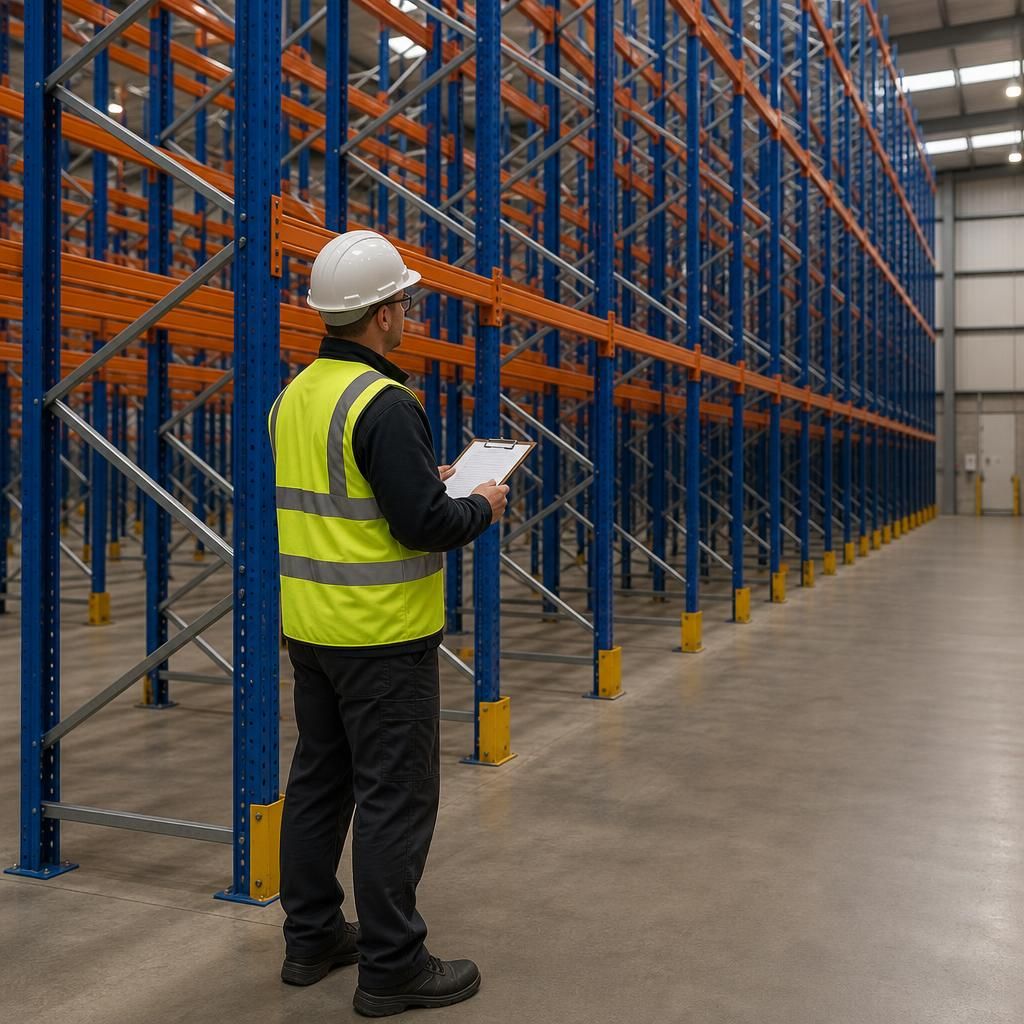
Professional warehouse racking installation ensures that the storage structure is assembled, aligned and secured in accordance with the approved design and manufacturer’s instructions. This protects the system’s intended load capacity and reduces risks caused by incorrect connections, unsuitable fixings, poor levelling or missing bracing.
An experienced installation team also checks practical site conditions, including floor suitability, aisle clearances, access routes, handling equipment and vulnerable areas requiring protection. These checks help prevent installation defects and create a safer, more efficient layout that can be inspected, maintained and adapted responsibly over time.
Discuss your warehouse racking installation requirements
Discuss your warehouse racking installation requirements with our experienced team to confirm the appropriate layout, components, protection and installation arrangements for your site.