
What are the key benefits of implementing pallet racking systems in a warehouse?
Pallet racking systems provide structured, accessible storage for palletised goods, helping warehouses make better use of available space while keeping stock organised. When properly designed, installed and maintained, they can improve picking efficiency, stock visibility, workplace safety and storage capacity.
Pallet racking systems are structured warehouse storage solutions designed to hold palletised goods at different levels, making better use of the available floor area and building height. When correctly specified, installed and maintained, a pallet racking system can increase storage capacity, improve stock access, support safer handling practices and make warehouse operations more efficient.
More effective use of warehouse space
The main benefit of pallet racking is the ability to store goods vertically rather than relying solely on floor-level storage. This can increase usable capacity within the existing warehouse footprint, provided the building height, floor condition, access equipment, fire protection arrangements and operational requirements are suitable.
Organised pallet racking also helps separate storage locations from working areas, circulation routes and loading activities. This reduces unnecessary use of floor space and can make it easier to plan the warehouse layout. However, capacity should never be increased by reducing aisle widths or clearances below safe operating requirements. The design must allow forklifts and other handling equipment to manoeuvre safely.
Improved stock organisation and visibility
A pallet racking system gives each product a defined storage location. Clear labelling and a consistent location system make it easier for operatives to identify where stock belongs and where it can be found. This supports more accurate put-away, picking and replenishment processes.
Good stock visibility can also reduce the likelihood of pallets being left in unsuitable areas, blocking access routes or becoming difficult to retrieve. The most appropriate configuration depends on the type of goods, pallet dimensions, stock rotation, load weights and whether direct access to every pallet is required.
Faster access to palletised goods
Different pallet racking systems support different access and stock rotation requirements. Selective pallet racking provides direct access to individual pallet locations, which is useful where products vary frequently or orders require a broad range of stock. High-density systems can store more similar products in a smaller area, although access arrangements and stock management need to be carefully considered.
A well-planned layout can reduce travel distances, unnecessary handling and waiting time. Positioning high-demand products in suitable locations may also improve picking efficiency, but product placement must take account of load weights, handling equipment and safe working procedures.
Better stock control
Defined locations make it easier to monitor stock levels, identify discrepancies and apply appropriate rotation methods. Where goods have expiry dates, batch controls or a required dispatch sequence, the chosen system should support the correct stock rotation process, such as first-in, first-out or last-in, first-out arrangements.
Improved stock control can help prevent misplaced pallets, reduce avoidable handling and make stock checks more straightforward. The storage method should be selected around the operational process rather than simply the maximum number of pallet positions.
Improved workplace safety
Correctly designed pallet racking provides stable, clearly defined storage locations and helps keep pallets away from pedestrian routes and other areas where they could create a hazard. It can also support safer forklift operations by establishing consistent aisles, working clearances and loading positions.
Safety depends on more than the presence of the system. Loads must be suitable for the beams and frames, pallets must be in good condition, and operatives must be trained in safe loading and unloading practices. Damaged components, missing safety pins, displaced beams and overloaded locations require prompt attention. A formal inspection and reporting process is essential for identifying defects before they lead to a more serious failure.
Support for compliance and responsible operation
A pallet racking installation should be designed, installed and used in line with relevant industry guidance, manufacturer information and applicable workplace safety duties. Load notices, protection measures, safe clearances and inspection arrangements should be appropriate to the system and the way it is used.
Regular inspections help confirm that the system remains suitable after changes to loads, handling equipment, layout or working practices. A competent person should assess damage and recommend whether affected areas need to be unloaded, repaired, replaced or returned to service. Keeping inspection records and repair information provides a useful audit trail and helps demonstrate that safety is being managed systematically.
Flexibility for changing operations
Many pallet racking systems can be adapted to accommodate changes in stock profiles, pallet sizes or storage requirements. Adjustable beam levels and compatible accessories may allow the layout to evolve without replacing the entire installation. Any alteration must be properly assessed and carried out in accordance with the system design and manufacturer requirements.
Flexibility does not mean that components can be moved or substituted without control. Changes can affect load capacities, clearances, stability and the safe operation of handling equipment. Layout amendments should therefore be planned, recorded and checked by suitably experienced personnel.
Potential cost and efficiency benefits
Using vertical space effectively may reduce the need to expand into additional premises, while better organisation can reduce wasted handling time and make labour-intensive processes more consistent. These benefits depend on selecting a system that matches the goods and workflow. A high-density solution is not automatically the most economical option if it slows access or requires unsuitable handling equipment.
The total cost should include design, installation, protection, inspections, maintenance, repairs, training and any future alterations. Preventative care is particularly important because small defects or poor loading practices can reduce performance and create avoidable operational disruption.
How to achieve the benefits safely
- Assess pallet dimensions, load weights, stock rotation and access requirements before selecting the system.
- Check that the warehouse floor, building structure, lighting, fire arrangements and handling equipment are suitable.
- Use a competent supplier or installer to design and install the system correctly.
- Display accurate load notices and ensure operatives understand the limits and safe-use procedures.
- Protect frames, corners and other vulnerable areas where handling equipment operates.
- Carry out routine user checks and arrange formal inspections at appropriate intervals.
- Quarantine or unload damaged locations where necessary and complete repairs without undue delay.
- Review the installation whenever loads, equipment, layout or working practices change.
Overall, pallet racking systems can deliver greater capacity, clearer stock control, easier access and safer warehouse operations. The benefits are achieved through suitable design and disciplined management rather than the equipment alone. Professional installation, competent inspections, timely repairs and effective operator training help ensure that the system remains safe, compliant and efficient throughout its working life.
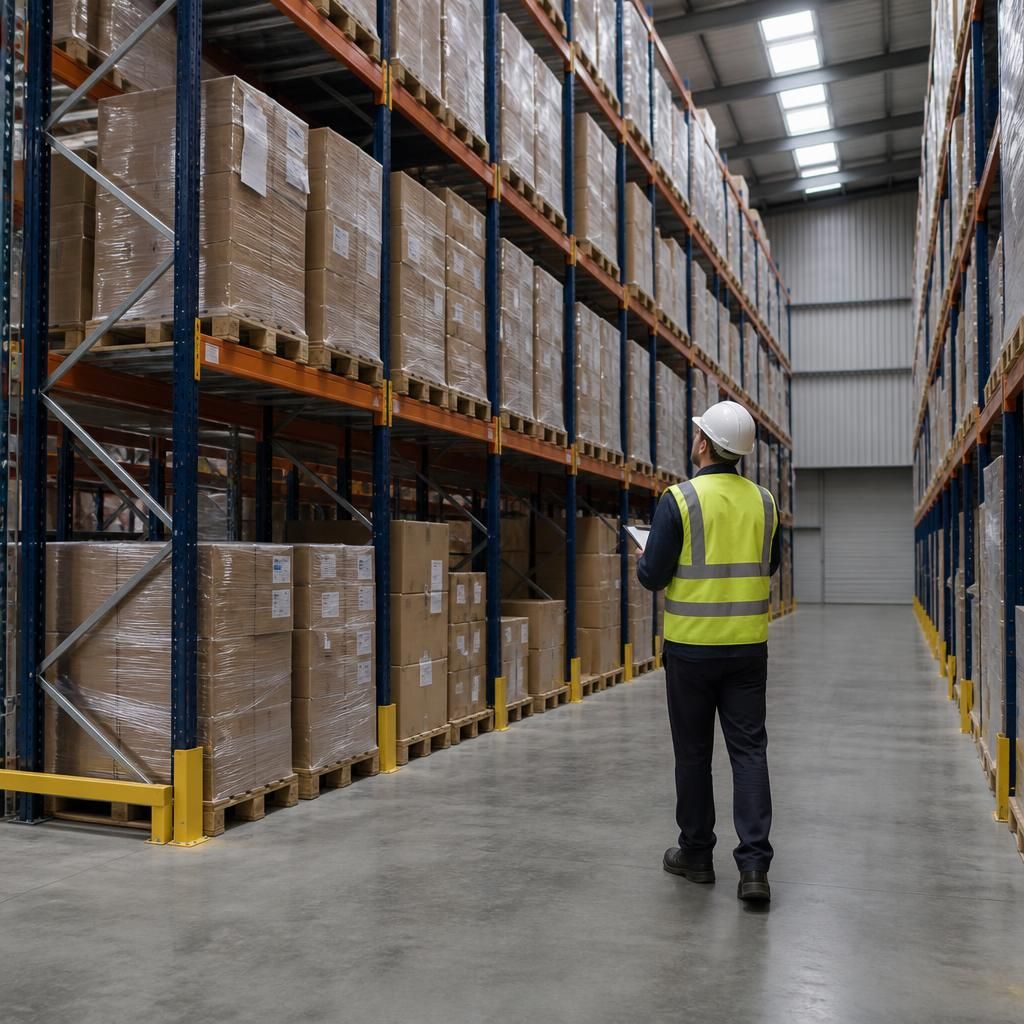
Pallet racking systems improve warehouse safety by creating defined storage locations, clear access aisles and controlled loading positions for palletised goods. This reduces the likelihood of stock being placed in walkways or handled in unsuitable areas, provided the system is correctly designed and used.
The safety benefits depend on ongoing management. Loads must remain within the stated capacity, pallets should be suitable and undamaged, and operatives need to understand safe loading and unloading procedures. Routine user checks and formal inspections can identify damaged frames, displaced beams, missing safety pins or other defects before they affect the stability of the installation.
Where damage is found, the affected location should be unloaded or isolated and assessed by a competent person. Prompt repairs, accurate load notices and proper records help keep the warehouse racking system safe, compliant and suitable for daily operations.
Discuss your pallet racking requirements
Discuss your pallet racking requirements with Able Racking to identify a safe, practical system for your warehouse layout, stock and handling processes. Our experienced team can advise on design, installation, inspections and ongoing maintenance.