
What are the maintenance and inspection requirements for steel mezzanine structures?
Steel mezzanine structures require planned visual checks, documented inspections by a competent person, and prompt maintenance of any damage, corrosion, loose fixings, decking defects, guardrails or access components. Inspection frequency should reflect the structure’s design, use and environment, with records retained and the platform taken out of service where a defect could affect safety.
Steel mezzanine structures require planned user checks, documented inspections by a competent person and prompt maintenance whenever damage, deterioration or unsafe changes are identified. The inspection programme should reflect the structure’s design, loading, environment, access arrangements and intensity of use. Records should be retained, and the platform or affected area should be taken out of service where a defect could compromise safety.
Maintenance and inspection are ongoing responsibilities rather than a one-off activity after installation. The original design information, load limits, layout drawings and manufacturer or installer guidance should be available to the people responsible for managing the structure. These documents provide the reference point for checking whether the platform remains in the condition for which it was designed.
Routine checks by site personnel
Employees who use or manage the platform should carry out routine visual checks as part of normal site operations. The frequency should be determined by the risk assessment and working conditions. Checks may need to be more frequent where there is vehicle movement, frequent loading and unloading, vibration, impact risk, corrosive substances, temperature variation or a history of damage.
Routine checks should look for visible signs of:
- Impact damage to columns, beams, bracing, handrails, gates, stairs or barriers.
- Distortion, bending, cracking, splitting or movement in structural or access components.
- Loose, missing or damaged bolts, fixings, welds, plates and connections.
- Corrosion, flaking coatings or deterioration caused by moisture, chemicals or other environmental conditions.
- Damaged, loose, lifted or deteriorated decking and any gaps that could create a trip or falling-object hazard.
- Defective edge protection, self-closing gates, loading gates, toe boards or protection around openings.
- Blocked, damaged or poorly lit stairs, ladders, walkways and emergency escape routes.
- Overloading, unstable loads, poor load distribution or storage outside the approved layout.
Findings should be reported through the site’s normal safety process. A quick visual check is not a substitute for a formal inspection, and employees should not attempt structural repairs or alter components unless they are authorised and suitably competent.
Formal inspection by a competent person
A formal inspection should be completed by a competent person with suitable knowledge and practical experience of steel structures, access systems, loading risks and relevant safety requirements. The person should be able to recognise defects, assess their significance and specify appropriate corrective action. Where the structure is complex, heavily loaded, damaged or subject to unusual conditions, specialist structural engineering advice may be necessary.
The inspection should assess the complete installation rather than focusing only on the main steelwork. It should include the supporting structure, connections, bracing, decking, edge protection, access equipment, loading areas and any associated safety devices. The competent person should also check that the current use, layout and imposed loads remain consistent with the design assumptions.
There is no single inspection interval that is suitable for every steel mezzanine structure. The responsible person should establish an appropriate schedule through a documented risk assessment, taking account of the manufacturer’s information, the original design, the environment, use, previous findings and any changes to the workplace. An inspection may also be required following an event that could have affected stability or integrity, such as a collision, fire, flood, significant alteration, abnormal loading or extended period of deterioration.
What the inspection should verify
- Structural steelwork: Columns, beams, joists, bracing and supports should be checked for impact, deformation, cracking, corrosion and signs of movement.
- Connections: Bolted and welded connections should be examined for looseness, missing components, distortion, cracking or other evidence of failure.
- Decking: Panels, boards and fixings should be secure, correctly supported and free from damage that could allow a person, product or equipment to fall through.
- Edge protection: Guardrails, intermediate rails, toe boards and barriers should be continuous, secure and suitable for the activities carried out at the edge.
- Loading gates and openings: Gates and barriers should operate correctly, prevent falls when open access is not intended and be used in accordance with the safe system of work.
- Access: Stairs, ladders, landings, handrails and walkways should be secure, unobstructed and maintained in a condition that supports safe movement.
- Fire precautions: The inspection should consider the condition and accessibility of fire protection, escape routes and any fire-separation measures incorporated into the design.
- Load control: The stated safe working load should be displayed where required, remain legible and correspond with the current use and layout.
- Surrounding conditions: The area beneath and around the platform should be checked for vehicle impact exposure, water ingress, chemical attack, heat sources and other hazards.
Maintenance and defect control
Maintenance should be based on the inspection findings and prioritised according to risk. A defect affecting stability, edge protection, access or the ability to control loads should be treated as urgent. The affected area should be clearly identified and restricted or taken out of service until a competent person confirms that it is safe to use again.
Repairs should follow an approved method and should not rely on improvised welding, drilling, packing or replacement parts that have not been assessed for compatibility. Structural repairs and changes should be specified or approved by an appropriately qualified person. After repair, the work should be inspected, documented and, where necessary, verified against the design before the platform returns to service.
Preventative maintenance may include tightening or replacing approved fixings, treating suitable areas of corrosion, renewing damaged decking, maintaining protective coatings, lubricating access equipment where appropriate and repairing barriers or gates. The underlying cause should also be addressed. For example, repeated impact damage may require physical protection, revised traffic routes, improved visibility or additional workplace controls rather than repeated repairs alone.
Changes to use or layout
Any alteration can affect the original design assumptions and should be controlled before work begins. This includes adding equipment, changing the storage arrangement, introducing heavier or more concentrated loads, installing conveyors or services, modifying stairs or gates, removing bracing, fixing items to the steelwork or changing the use of the area below.
A proposed change should be reviewed by a competent designer or structural engineer where it could affect load capacity, stability, fire performance, access or escape. Updated drawings, load information, risk assessments and operating instructions should be issued where necessary. The revised installation should then be inspected before it is put into use.
Records that should be kept
Inspection and maintenance records should provide a clear history of the platform’s condition and the action taken. They should normally identify the structure or area inspected, the date, the person who completed the inspection, the findings, the risk classification or priority, required remedial work, the person responsible and the completion date. Photographs, marked-up drawings and repair documentation can be useful for tracking recurring defects and demonstrating that actions have been closed out.
Records should be available to site management and relevant employees. They should be reviewed when the structure, work activity or surrounding environment changes. Keeping records does not make an unsafe platform acceptable, but it supports effective management and helps demonstrate that inspections and repairs have been properly controlled.
Practical management approach
- Keep the original design, load and installation information accessible.
- Set routine user checks and formal inspection arrangements through a documented risk assessment.
- Train relevant employees to recognise and report damage, overloading and unsafe changes.
- Control vehicle movements, loading activities and work near exposed structural components.
- Record defects clearly and assign corrective actions to named individuals.
- Restrict access where a defect presents a risk of collapse, falls, falling objects or unsafe access.
- Use competent specialists for structural assessment, repairs and proposed alterations.
- Review the inspection programme after incidents, changes of use, repairs or significant environmental changes.
A well-managed inspection programme combines everyday awareness with independent, competent assessment. This approach helps identify deterioration before it becomes a serious safety issue, supports compliance with the site’s legal and risk-control duties, and keeps the steel mezzanine structure suitable for its intended use.
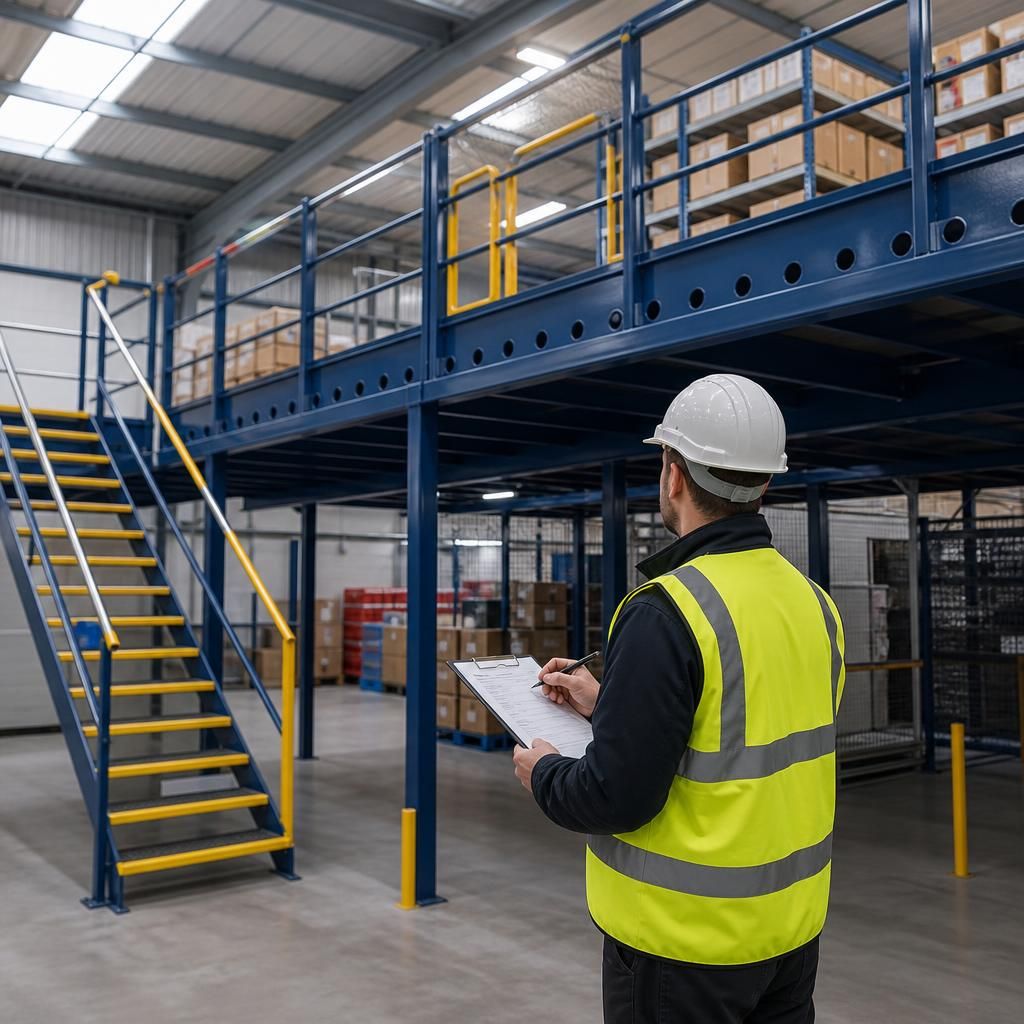
Formal inspections of steel mezzanine structures should be completed by a competent person who can assess structural steelwork, connections, decking, edge protection, access equipment and loading arrangements. The inspection should confirm that the structure remains suitable for its current use and has not been affected by impact, corrosion, overloading, alterations or environmental conditions.
Any defect that could affect stability, prevent safe access or create a fall or falling-object risk should be recorded and prioritised. The affected area should be restricted until suitable repairs have been completed and a competent person has confirmed that it is safe to return to service. Inspection findings, repair details and completion dates should be retained as part of the structure’s ongoing safety record.
Arrange a Steel Mezzanine Inspection
Arrange a competent inspection of your steel mezzanine structure to identify defects, confirm ongoing suitability and support safe, compliant use.