
What are the key benefits of regular warehouse racking maintenance?
Regular warehouse racking maintenance helps identify and correct defects before they compromise safety, supporting compliance and reducing the risk of costly damage or disruption. It also helps maintain the storage system’s performance, extend service life and keep warehouse operations efficient.
Regular warehouse racking maintenance keeps storage systems safe, serviceable and suitable for the loads and working conditions they are expected to support. It involves checking for defects, correcting damage, tightening or replacing suitable components where necessary, and confirming that the system continues to be used in accordance with its design and operating requirements.
The key benefits are improved workplace safety, stronger compliance, fewer unexpected repairs, lower long-term costs and more reliable warehouse performance. Maintenance is most effective when it is planned and preventative rather than delayed until visible damage causes an incident or interrupts operations.
Improved protection for people and stock
Warehouse racking can be affected by forklift impacts, loading errors, overloading, corrosion, loose components and general wear. Small defects can alter the stability or load-bearing performance of a system, particularly if damaged frames, beams, bracing or protective components are left in service.
Routine maintenance helps identify these issues at an early stage. Damaged components can be assessed, isolated where appropriate and repaired or replaced before the defect creates a greater risk to warehouse workers, stored goods or nearby equipment. It also supports good housekeeping by ensuring that aisles, access points and storage locations remain suitable for safe use.
Better support for legal and workplace responsibilities
Employers have responsibilities to provide and maintain safe work equipment and safe systems of work. A planned maintenance programme provides practical evidence that warehouse racking is being managed responsibly and that defects are not being ignored.
Maintenance should work alongside regular visual checks by warehouse staff and periodic inspections by a suitably competent person. Records should identify the equipment examined, defects found, actions taken and any items that remain restricted or require follow-up. This creates a clear audit trail and helps demonstrate that corrective action has been properly controlled.
Maintenance does not replace the need to follow the manufacturer’s instructions, observe safe working loads or arrange inspections at appropriate intervals. Instead, it forms part of a wider system for managing warehouse racking safely.
Fewer unexpected repairs and operational interruptions
Preventative maintenance allows minor issues to be dealt with during planned work rather than during an urgent breakdown or after an incident. For example, a damaged upright protector, loose component or deteriorating finish may be straightforward to address when identified early, but could contribute to more extensive damage if left unresolved.
Planned work also makes it easier to coordinate access, stock movements and any temporary restrictions. This reduces the likelihood of closing an area without warning, relocating stored goods at short notice or delaying picking and dispatch activities.
Lower total maintenance costs
Regular maintenance can reduce the cost of ownership by limiting the extent of damage and helping components reach their intended service life. Early corrective work is generally easier to plan than emergency repairs involving extensive dismantling, replacement stock, temporary storage or operational downtime.
A maintenance record can also reveal recurring problems, such as repeated vehicle impacts, unsuitable loading practices or poorly positioned protective equipment. Addressing the underlying cause is more cost-effective than repeatedly repairing the same location. Remedial measures may include refresher training, changes to traffic routes, improved load identification or additional protection in vulnerable areas.
More consistent warehouse efficiency
A well-maintained storage system supports dependable warehouse activity. Clearly serviceable frames, beams, protection and accessories make it easier for operators to use locations correctly and identify areas that should not be loaded.
Maintenance can also help prevent avoidable restrictions caused by damaged bays or incomplete repairs. When storage locations remain available and appropriately marked, stock placement, picking and replenishment can be carried out with fewer interruptions. Keeping the system in good condition therefore supports both safety and day-to-day productivity.
Extended service life of the storage system
Warehouse racking is a long-term asset, but its condition depends on the environment, loading practices, vehicle movements and the quality of previous repairs. Maintenance helps control deterioration caused by impact, corrosion, contamination and component wear.
It also provides an opportunity to review whether the system is still suitable for current operations. Changes in pallet dimensions, load weights, handling equipment or warehouse layout may affect how the system should be used. Identifying these changes early helps prevent inappropriate loading and highlights when a design review or specialist assessment is needed.
More reliable records and decision-making
Accurate maintenance records help build a history of the system’s condition. This can show which locations have sustained repeated damage, which components have been replaced and whether previous recommendations have been completed.
These records support sensible decisions about repair, replacement, protection and future inspection frequency. They are particularly useful when responsibility for a warehouse, site team or maintenance programme changes, as important information is less likely to be lost.
What effective maintenance should include
- Reviewing previous inspection findings, reported impacts and outstanding remedial actions.
- Checking frames, uprights, bracing, beams, connectors, baseplates, guards and other relevant components for damage, movement, corrosion or missing parts.
- Confirming that load notices and identification remain present, legible and appropriate for the current configuration.
- Assessing whether damaged areas require immediate isolation, unloading, repair or replacement.
- Using suitable components and repair methods approved for the particular storage system.
- Checking completed work and recording what has been repaired, replaced or left subject to further action.
- Reviewing operating practices where damage has resulted from vehicle impact, incorrect loading or unsuitable handling.
Maintenance should be carried out by people with appropriate knowledge and experience, particularly where the work involves structural components, changes to the configuration or decisions about whether a damaged bay can remain in use. Defects that may affect stability should not be concealed, straightened or improvised around without a suitable assessment.
In practical terms, regular warehouse racking maintenance gives warehouse operators better control over risk, costs and availability. It helps preserve the condition of the system, supports inspection and compliance arrangements, and reduces the chance that a minor defect develops into a serious safety issue or an expensive operational problem.
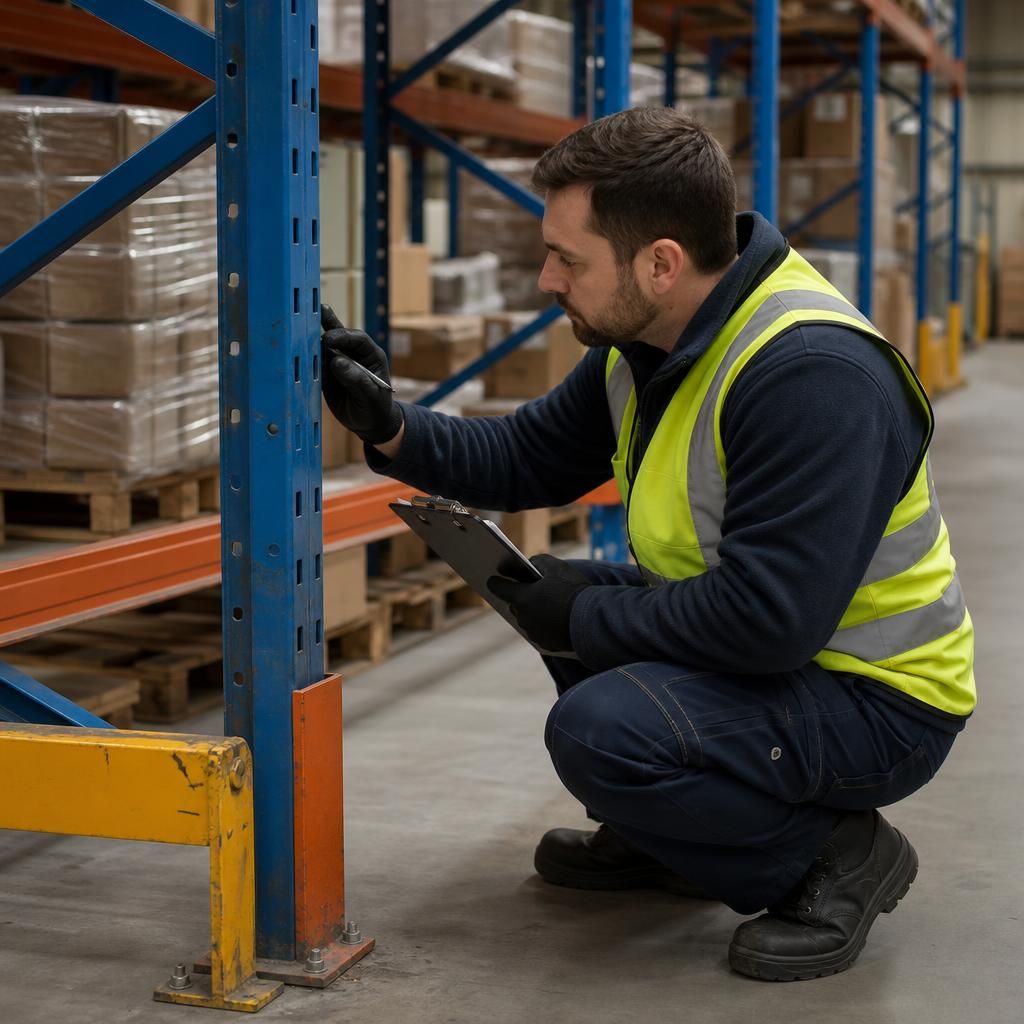
Regular warehouse racking maintenance identifies defects before they lead to unsafe conditions, unplanned repairs or disruption to warehouse operations. Checking frames, beams, bracing, connectors, protection and baseplates helps ensure that damage, corrosion, loose components and missing parts are assessed and dealt with appropriately.
Planned maintenance also makes corrective work easier to control. Damaged areas can be isolated, stock can be moved safely and repairs can be arranged without the pressure of an unexpected failure. Keeping clear records of defects and completed work helps identify recurring causes, such as vehicle impacts or incorrect loading, so that the underlying problem can be addressed rather than repeatedly repaired.
Arrange Your Warehouse Racking Maintenance Review
Arrange your warehouse racking maintenance review with Able Racking to identify defects, assess current condition and plan any necessary remedial work. Contact our experienced team to discuss your requirements.