
What are the most common types of pallet racking systems and their uses in warehouses?
The most common pallet racking systems are selective, drive-in, push-back, pallet flow, high-density and very narrow aisle designs. Each suits different warehouse requirements, including direct pallet access, high storage capacity, stock rotation, space optimisation and efficient use of available height.
The most common pallet racking systems are selective, drive-in, push-back, pallet flow, high-density and very narrow aisle designs. Each system is intended for a different balance of pallet access, storage density, stock rotation, handling equipment and available warehouse space. The right choice depends on the number and type of pallets held, how often stock is accessed, whether strict first-in, first-out rotation is required and the characteristics of the building.
Although pallet racking systems can look similar, their operating principles and safety requirements differ. A layout that works well for a fast-moving distribution operation may be unsuitable for bulk storage or products with strict date control. The system should therefore be selected as part of a wider warehouse design, rather than based on storage capacity alone.
Selective pallet racking
Selective pallet racking is the most widely used warehouse racking system because it provides direct access to every pallet location. Pallets are stored on adjustable horizontal beams, with aisles arranged to suit the handling equipment used on site. The beam levels can usually be repositioned to accommodate different pallet heights, subject to the design specification and safe working load.
This system is suitable where a wide range of products is stored and individual pallets need to be located quickly. It is commonly used in general warehousing, manufacturing, wholesalers, retail distribution and spare-parts storage. Selective pallet racking is particularly useful when stock keeping units change regularly or when operators need to pick from several pallet locations during the same shift.
- Direct access to each pallet position.
- Good flexibility for mixed products and varying pallet sizes.
- Simple stock location and order-picking arrangements.
- Easy to adapt when storage requirements change, provided alterations are approved and carried out correctly.
- Lower storage density than systems designed specifically for bulk storage, because operating aisles are required between the rows.
The aisle width should be matched to the turning requirements and operating method of the forklift trucks or other equipment in use. Reducing aisle widths without reviewing the equipment, floor conditions, clearances and risk controls can create unsafe operating conditions.
Drive-in pallet racking
Drive-in pallet racking is a high-density system in which a forklift truck enters storage lanes to place and retrieve pallets. Pallets are supported on rails within the lanes rather than on conventional front-to-back beams. Removing many of the access aisles allows more of the available floor area to be used for storage.
Drive-in storage is generally best suited to large quantities of the same product, where the number of pallet lines is limited and direct access to every pallet is not essential. It can be effective for seasonal goods, uniform loads and products that are moved in batches. The system normally follows a last-in, first-out operating pattern, although the precise arrangement depends on how pallets are loaded and removed.
- High storage density compared with conventional selective layouts.
- Reduced aisle space and efficient use of floor area.
- Suitable for bulk quantities of consistent products.
- Less suitable for a large variety of products requiring individual pallet access.
- Requires disciplined forklift operation to protect guide rails, uprights and pallet supports.
Every pallet must be suitable for the support rails and the loading method. Damaged, incompatible or poorly positioned pallets can increase the risk of instability. Operators also need clear procedures for entering and exiting lanes, checking load positions and preventing contact with the structure.
Push-back pallet racking
Push-back pallet racking stores pallets on inclined rails or wheeled carts. When a new pallet is loaded, it pushes the existing pallets further back into the lane. When the front pallet is removed, the stored pallets move forward under gravity. This allows several pallets to be stored behind one another while keeping forklift movements at the aisle face.
Push-back systems are useful where higher density is needed but access to a greater number of individual product lines is still required. They are commonly used for medium- to fast-moving stock, reserve storage and products held in multiple pallets per line. Depending on the configuration, the system normally operates on a last-in, first-out basis.
- More pallet positions per aisle than a standard selective layout.
- Faster loading and retrieval from the front of each lane.
- Suitable for products stored in batches or several pallets deep.
- Less direct access than selective pallet racking.
- Requires compatible pallets and controlled loading speeds to avoid damaging the carts, rails or frames.
Push-back equipment must be kept clear of loose packaging, debris and obstructions that could prevent the carts from moving correctly. The slope, travel distance and load characteristics should be considered during design and operation.
Pallet flow racking
Pallet flow racking uses inclined roller lanes so pallets are loaded from one side and move towards the unloading side. Separating loading and retrieval faces supports a first-in, first-out stock rotation method, making the system suitable for products with expiry dates, batch controls or regular replenishment requirements.
As pallets move automatically towards the pick face, forklift traffic within the storage lanes is reduced. Pallet flow is often used in food and drink distribution, pharmaceutical storage, cold stores and other operations where stock rotation is important. Braking systems, separators and lane controls may be needed to manage pallet movement safely, particularly with heavy or variable loads.
- Supports first-in, first-out stock rotation.
- Separates loading and unloading activities.
- Reduces the need for forklift trucks to enter storage lanes.
- Uses warehouse depth efficiently while retaining an organised picking face.
- Needs careful attention to pallet quality, load weight, roller design and maintenance.
Pallets should be checked for damage and suitability before entering flow lanes. Broken boards, protruding loads or inconsistent pallet dimensions can affect movement and create blockages. Staff should also understand how to clear a stopped pallet without entering a lane or placing themselves in an unsafe position.
High-density pallet racking
High-density pallet racking is a broad term covering systems designed to store more pallets within a given floor area than a conventional selective arrangement. Drive-in, push-back, pallet flow and other specialised layouts may all be considered high-density solutions. The best option depends on whether the priority is maximum capacity, stock rotation, product selectivity or a combination of these factors.
High-density storage can reduce the space used for aisles, but it may also reduce direct access to individual pallets. It is therefore most effective when product profiles, pallet quantities and movement patterns are understood. A capacity-focused design can be inefficient if operators frequently need to move several pallets to reach a particular load.
Before installation, assess the available clear height, floor condition, fire protection arrangements, forklift specifications, pallet dimensions and planned load weights. Storage density must not be increased by adding unapproved levels, changing beam positions or exceeding the stated safe working loads.
Very narrow aisle pallet racking
Very narrow aisle pallet racking uses closely spaced aisles and specialised trucks to provide high storage capacity while retaining access to individual pallet locations. The trucks may operate with guidance systems and are selected according to the required lift height, pallet dimensions and aisle configuration.
This system is appropriate where warehouse height is available and land or floor area is limited. It can provide the selectivity of a conventional layout with a more intensive use of the building. However, it places greater demands on floor flatness, aisle control, truck suitability and operator training.
- Allows more pallet positions within the available floor area.
- Retains individual access to stored pallets.
- Makes effective use of available building height.
- Requires compatible handling equipment and accurately controlled traffic routes.
- May be less flexible if the warehouse changes to different trucks, pallet sizes or operating methods.
Aisle protection, end-of-aisle controls, guidance arrangements and pedestrian segregation should be considered as part of the complete design. The performance of the system depends on the structure, floor, trucks and operating procedures working together.
How to compare the main systems
Selective pallet racking is usually the starting point when access and flexibility are more important than maximum density. Drive-in is more appropriate for bulk quantities of similar products where last-in, first-out storage is acceptable. Push-back provides deeper storage with access from the aisle face, while pallet flow is generally preferred where first-in, first-out rotation is essential. Very narrow aisle systems can increase capacity without sacrificing individual pallet access, but they require suitable equipment and a controlled layout.
The decision should take account of:
- Number of pallet lines and total pallet quantity.
- Product dimensions, pallet condition and load stability.
- Stock rotation requirements, including batch or expiry-date control.
- Frequency of pallet movements and order-picking activity.
- Available floor area, clear height and floor flatness.
- Forklift type, lift height, turning requirements and operator competence.
- Required access for inspections, maintenance, fire protection and emergency arrangements.
- Future changes in product range, throughput or storage method.
Safety and ongoing management
All pallet racking systems must be designed, installed and used in accordance with the manufacturer’s instructions, the agreed design loads and applicable workplace safety requirements. Load notices should be visible and kept accurate. They should reflect the actual beam levels, bay arrangement, pallet loads and any relevant configuration limits.
Regular visual checks by trained staff can identify impact damage, displaced components, overloaded positions, leaning frames, missing safety pins and damaged pallets. A formal inspection by a competent person should also be arranged at appropriate intervals and after significant events such as an impact, alteration or change in loading conditions. Damage should be reported, assessed and controlled promptly; affected areas may need to be unloaded until repairs are completed.
Installation, alteration and repair work should be carried out by suitably competent operatives. Components should not be substituted, welded, repositioned or removed without confirming that the change is safe and compatible with the original design. A properly selected system, supported by effective training and preventative maintenance, helps keep warehouse storage safe, compliant and efficient throughout its working life.
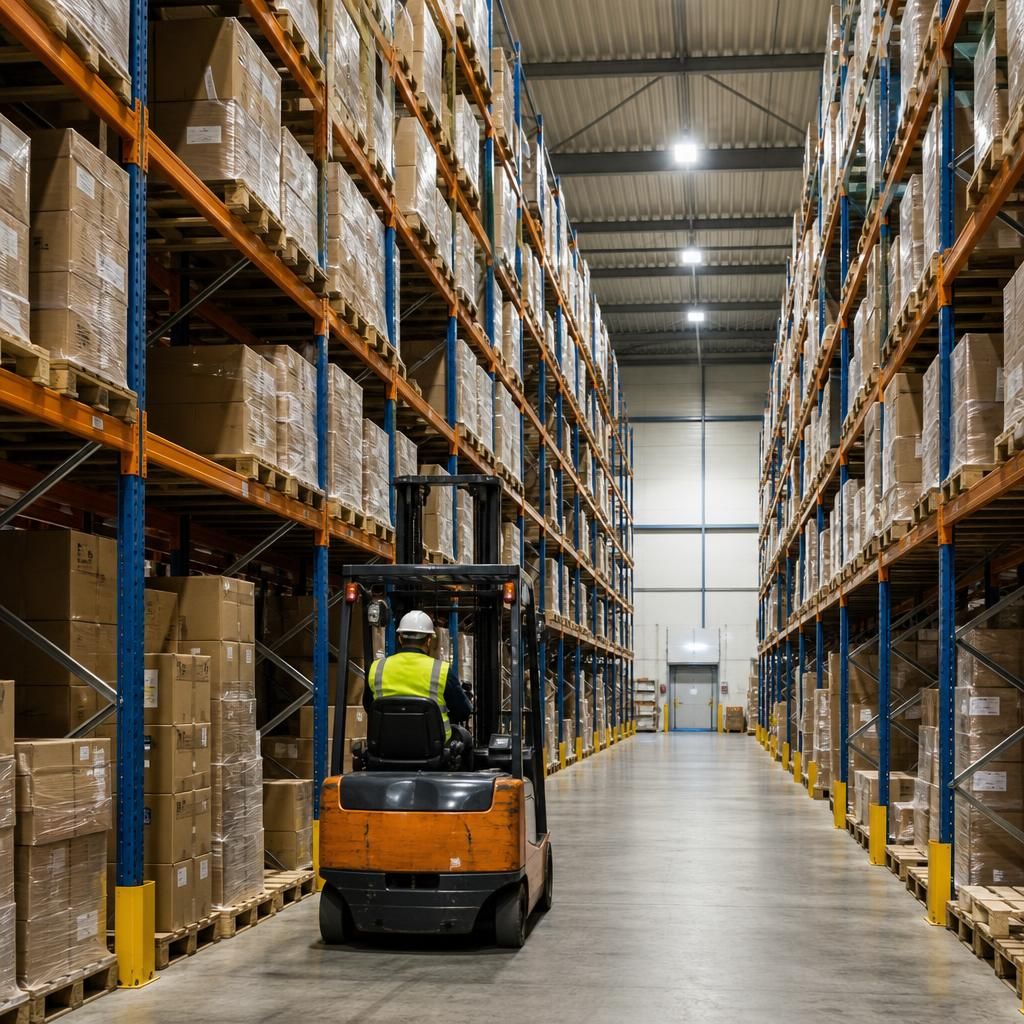
The most suitable pallet racking system depends primarily on how stock is accessed and rotated. Selective pallet racking provides direct access to every pallet, while drive-in and push-back systems store pallets more deeply to increase capacity. Pallet flow systems are designed for first-in, first-out stock rotation, and very narrow aisle pallet racking combines individual pallet access with efficient use of floor space.
Before choosing a system, assess the product range, pallet condition, required stock rotation, handling equipment, available clear height and expected movement patterns. Storage density should not be considered in isolation: a denser layout may reduce access or make stock control more difficult. The final design must also allow safe forklift operation, inspections, maintenance and clear display of safe working load information.
Discuss your pallet racking requirements with our experts
Discuss your pallet racking requirements with our experts. We can help you assess your storage needs and identify a safe, practical system for your warehouse.