
How does material choice influence warehouse racking pricing?
Material choice influences warehouse racking pricing through the steel grade, component thickness, protective finish and overall load capacity specified. Higher-quality materials may increase the initial purchase price, but they can improve durability, reduce maintenance and provide better long-term value when correctly selected for the intended loads and working environment.
Material choice affects warehouse racking pricing because the steel grade, section thickness, manufacturing method, protective finish and component specification determine how much material is required and how the system performs in service. A higher initial price can be justified where stronger, more durable materials reduce damage, maintenance and replacement requirements, but the most expensive option is not automatically the most suitable. The correct choice depends on the intended load, warehouse conditions, handling equipment and required service life.
Steel grade and strength
Steel is the principal material used for warehouse racking frames, beams, bracing and many accessories. Its strength affects the amount of steel needed to support the design loads safely. Higher-strength steel can allow manufacturers to produce lighter sections while maintaining the required capacity, although the final price also depends on forming, engineering and quality-control requirements.
Lower-cost steel may be suitable for lighter-duty applications, provided that the complete system has been designed and assessed for its intended use. Using a cheaper material without checking its load-bearing performance can create a false economy. An appropriately specified system should account for pallet weights, load distribution, bay configuration, handling activity and the forces created during normal warehouse operations.
Section thickness and component design
The thickness and profile of each component have a direct effect on material usage and pricing. Uprights, beams and bracing may be produced in different profiles to provide the required stiffness and load capacity. Thicker steel generally uses more raw material and may increase manufacturing, transport and installation costs. However, it can provide greater resistance to impact, deformation and repeated use where the environment is demanding.
Component design is more important than thickness alone. A carefully engineered profile may provide the required performance without simply adding unnecessary weight. This is why warehouse racking should be specified as a complete system rather than priced by steel weight alone. Connections, bracing, baseplates, beam locks and protective components all contribute to safety and overall cost.
New and reused steel
New warehouse racking usually offers the clearest specification, condition and warranty position. Every component can be selected for the intended layout and loading requirements, which makes it easier to establish a consistent design. It may carry a higher purchase price than reused equipment, but it can reduce the need to accommodate previous damage, mismatched components or limited availability.
Used warehouse racking can reduce initial expenditure where suitable components are available. The price should reflect condition, age, compatibility and the work required before installation. Uprights, beams and accessories must be checked for damage, corrosion, distortion and identification details. Components should not be mixed simply because they appear similar, as differences in profile, connection design or capacity can affect the performance of the finished system.
Inspection, sorting, replacement and additional protection can reduce the apparent saving from reused materials. A condition assessment and load verification should therefore form part of the buying decision. The lowest purchase price may not represent the lowest whole-life cost if repairs or early replacement are likely.
Protective finishes and warehouse conditions
Powder coating, paint, galvanising and other protective finishes influence both the price and service life of warehouse racking. A standard finish may be adequate for a clean, dry internal warehouse. More demanding environments may require enhanced corrosion protection, particularly where there is moisture, condensation, temperature variation, wash-down activity or exposure to corrosive substances.
Galvanised components can cost more than standard painted steel, but they may be appropriate where corrosion resistance is a priority. The correct finish should be selected according to the actual conditions rather than applied as a default upgrade. Corrosion can weaken components and make inspections, repairs and eventual replacement more costly, so material selection should consider the environment over the expected working life.
Impact resistance and protection
Material choice also affects how warehouse racking responds to contact from forklift trucks, pallet trucks and other handling equipment. Heavier-duty sections and suitable protective barriers can help limit damage in exposed areas, although protection does not remove the need for safe operating procedures and regular inspections.
Protection should be targeted at locations with a realistic risk of impact, such as aisle ends, corners and exposed upright faces. Choosing stronger components throughout the warehouse may cost more than combining suitably specified steel with localised protection. This approach can provide better value, provided the layout, traffic routes and operating controls are properly assessed.
Accessories and compatible materials
Decking, support bars, mesh panels, timber boards, wheel guides, backstops and other accessories contribute to the final price. Their material and finish should match the load, pallet type and operating environment. For example, a system holding loose or unstable goods may require additional support or containment, while open mesh may be preferred where visibility and light transmission are important.
Accessories should be compatible with the warehouse racking design and should not be added without checking their effect on clearances, load distribution and stated capacities. A lower-priced accessory that does not fit correctly can lead to modification work, delays or unsafe loading arrangements.
How to compare material-based quotations
- Check the steel specification and confirm that the quoted components are designed for the required loads.
- Compare section profiles, thicknesses, finishes and protective features rather than comparing the total price alone.
- Confirm whether the quotation includes compatible beams, bracing, baseplates, fixings, decking and impact protection.
- Establish whether the equipment is new or reused and request clear information about condition and inspection.
- Review delivery, installation, alterations and any preparation work, as these costs may be affected by component weight and design.
- Consider the expected service life, inspection requirements, repairability and future availability of replacement parts.
Initial price versus whole-life value
The best material choice balances purchase price with performance over the working life of the warehouse racking. A lower-cost specification may be appropriate for controlled conditions and moderate use. A more robust or corrosion-resistant specification may offer better value where the system is heavily used, exposed to impact or expected to remain in service for a long period.
Whole-life value also depends on how well the system is installed, loaded and maintained. Even high-quality steel can be damaged by overloading, unsuitable pallets, vehicle impact or unauthorised alterations. Regular inspections can identify bent components, missing locks, corrosion and other issues before they become more serious. Prompt repairs using compatible parts help preserve the intended performance of the system.
Before accepting a quotation, provide accurate information about load weights, pallet dimensions, handling equipment, operating conditions and future expansion plans. A competent warehouse racking specialist can then specify the material and protection level that meet the application without adding unnecessary cost. This gives a more reliable comparison between quotations and supports a safer, more economical buying decision.
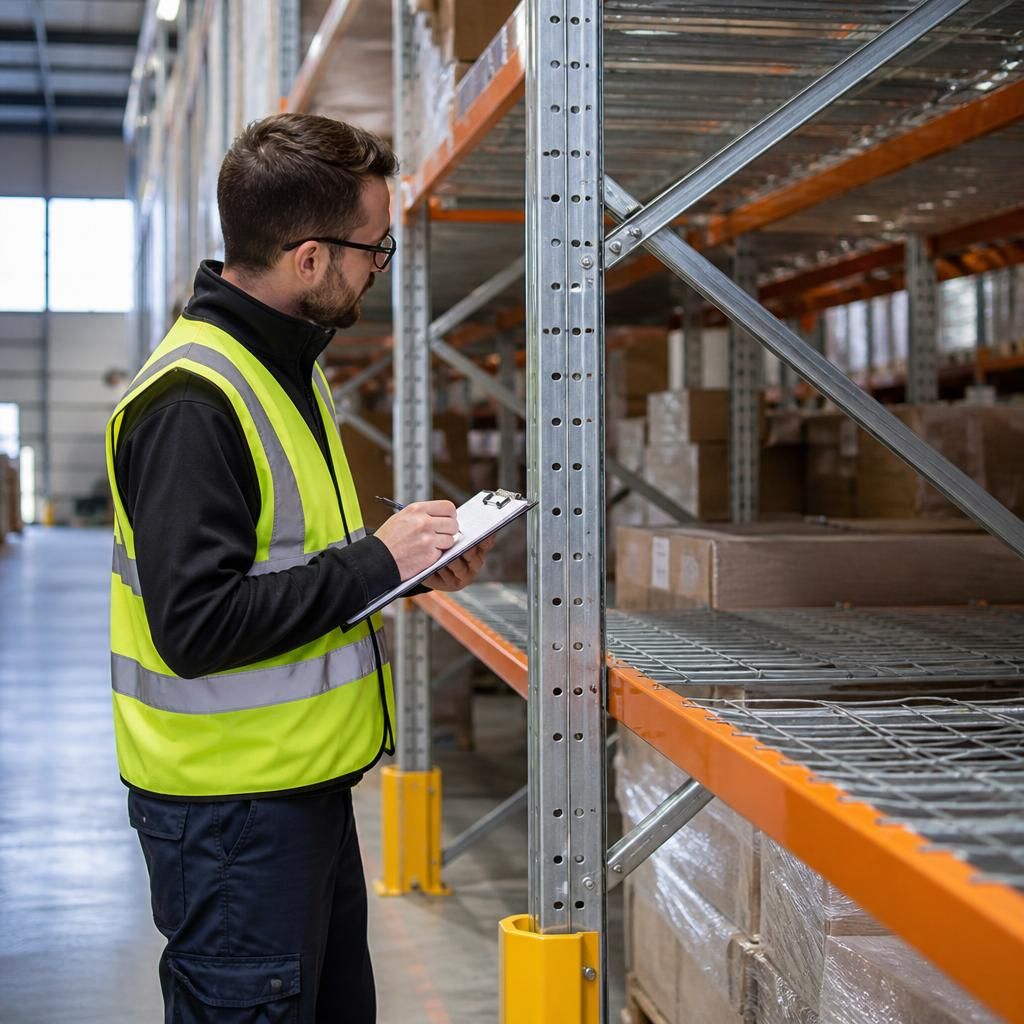
Material choice affects warehouse racking pricing by influencing strength, durability, corrosion resistance and the amount of maintenance required during the system’s working life. A higher-quality steel specification or protective finish may increase the initial quotation, but it can be appropriate where the system will carry heavy loads, experience frequent handling activity or operate in damp or corrosive conditions.
The lowest-cost material is not always the most economical option. Compare quotations by checking the steel specification, component condition, protective finish, stated load capacity and compatibility of all parts. Reused components may reduce the purchase price, but inspection, sorting, replacement and additional protection can alter the final cost. The most suitable choice is the material specification that meets the required loads and warehouse conditions without adding unnecessary capacity or protection.
Discuss your warehouse racking material requirements
Share your warehouse racking load requirements, operating conditions and preferred material specification with our experienced team. We can help assess suitable options and provide a clear quotation based on performance, compatibility and whole-life value.