
How often should warehouse racking safety inspections be conducted?
Warehouse racking safety inspections should include regular visual checks, typically weekly or at an interval determined by your risk assessment, plus a documented expert inspection at least every 12 months. Inspections should be more frequent after impact, alteration, damage or a significant change in use.
Warehouse racking safety inspections should include routine visual checks, normally carried out at least weekly or at an interval established by your risk assessment, together with a documented expert inspection at least every 12 months. Inspections should take place more frequently where the warehouse has heavy forklift traffic, a history of impact, demanding operating conditions or frequent changes to loads and storage arrangements.
UK guidance, including the HSE guidance for the use of storage equipment, expects employers to operate a planned inspection system based on risk. It does not mean that every warehouse can apply one fixed frequency. The appropriate interval depends on the type and condition of the warehouse racking, how it is used, the level of vehicle activity, the competence of operators and the consequences of a failure.
Routine visual checks should be completed by a nominated person who understands the warehouse racking layout and can recognise damage or unsafe conditions. These checks should cover upright frames, beams, bracing, baseplates, floor fixings, protection, load signs and the condition of stored goods. The person carrying out the check should also look for leaning frames, displaced components, overloaded levels, missing safety clips and changes that could affect stability.
Any damage or dangerous condition should be reported immediately rather than waiting for the next planned inspection. Where there is a serious defect, the affected section should be isolated and unloaded until it has been assessed and made safe. Damaged components should not be straightened, welded or altered as an informal repair, because this can affect their design performance and may conceal further damage.
A formal expert inspection should be completed at least annually. This should be carried out by a technically competent person with suitable knowledge and experience of warehouse racking safety. The inspection should be sufficiently detailed to identify damage, deterioration, unsafe alterations, unsuitable loading and issues with the surrounding working environment. It should result in a written report that records findings, priorities, recommended actions and any areas requiring immediate control.
An annual inspection is a minimum planning point, not a reason to postpone an inspection when conditions change. Arrange an additional inspection after:
- a forklift truck or other vehicle strikes warehouse racking;
- components are visibly damaged, displaced or showing signs of corrosion;
- the layout, beam levels, load type or operating method is changed;
- warehouse racking is dismantled, relocated, extended or reconfigured;
- there has been an unusual event, such as fire, flooding or an impact to the building or floor;
- loads exceed, or may exceed, the stated capacity; or
- repeated defects suggest that the existing inspection frequency is not sufficient.
The inspection schedule should be reviewed whenever the warehouse risk assessment changes. For example, increased forklift movements, new handling equipment, heavier or less stable loads, changes in staffing or extended operating hours may justify more frequent checks. The same applies if routine checks are identifying recurring damage or if corrective actions are regularly overdue.
Inspection records are an important part of the control system. Keep a record of the date, areas inspected, person responsible, defects found, photographs where useful, actions required and completion dates. Defects should be categorised by urgency so that immediate risks are controlled without delay and lower-priority maintenance is tracked to completion. A signed checklist alone is not enough if it does not show what was examined and how defects were resolved.
Responsibility should be clearly allocated. Warehouse operators can complete planned visual checks, but they should know what to look for, how to report concerns and when to stop using an affected bay. Supervisors should review records and make sure actions are completed. A competent inspector should provide the periodic expert assessment, particularly where damage, design changes or complex loading arrangements are involved.
Inspection frequency does not replace good warehouse racking safety controls. Loads must remain within the stated capacities, aisles must be kept clear, protective equipment must be maintained and alterations must be approved by a suitably competent person. Staff should also receive appropriate instruction so that damage is reported promptly and unsafe practices are not allowed to continue.
In practical terms, a suitable programme combines frequent operator checks, prompt reporting after any impact or change, and a documented expert inspection at least every 12 months. The risk assessment should then determine whether a shorter interval is necessary. This approach helps identify defects before they develop into a serious failure and provides clear evidence that warehouse racking safety is being actively managed.
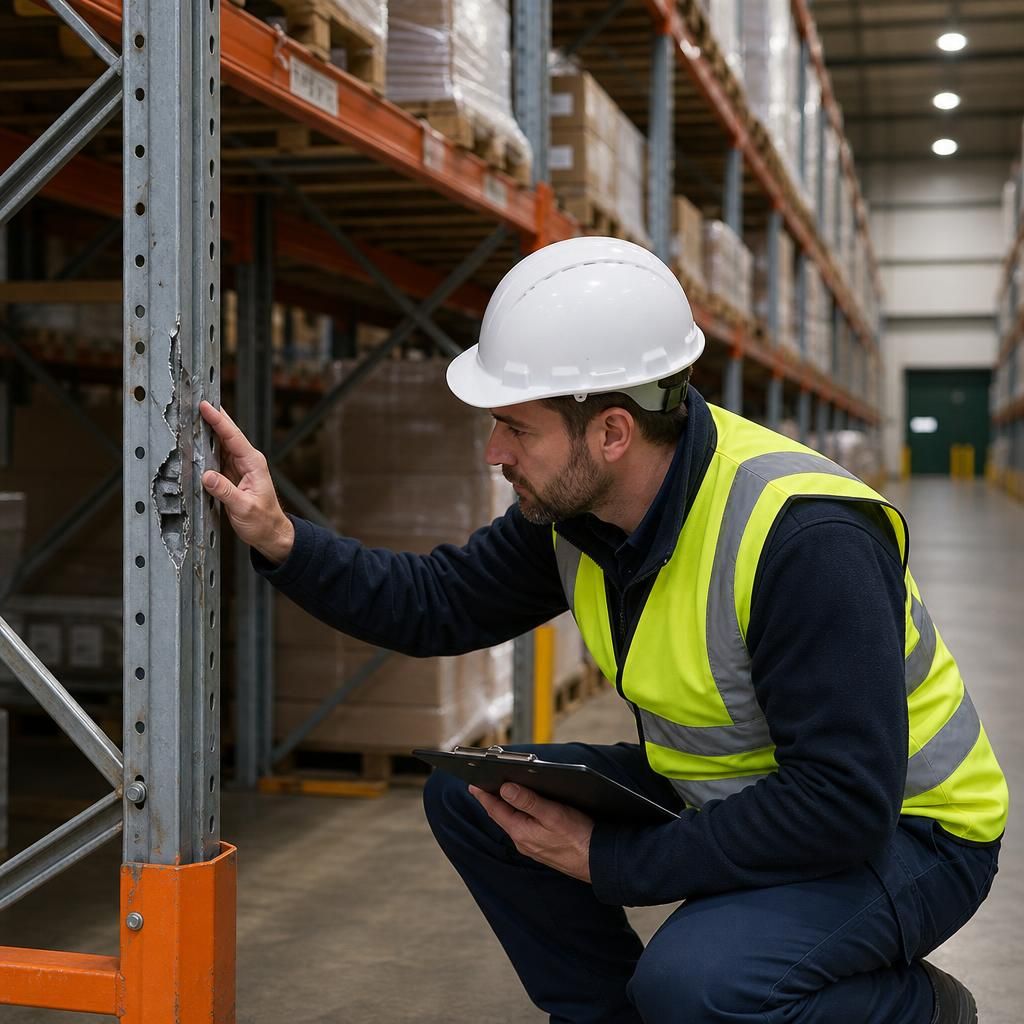
After any vehicle impact, visible damage or significant change to warehouse racking, arrange an additional safety inspection rather than waiting for the next scheduled review. The affected area should be reported immediately, isolated where necessary and unloaded until a competent person has assessed its condition.
Do not straighten, weld or modify damaged components as an informal repair. An expert inspection should identify damage to frames, beams, bracing, fixings and protection, confirm whether the affected section remains suitable for use, and record the corrective action required. This prompt response helps prevent a minor defect becoming a wider warehouse racking safety risk.
Arrange your warehouse racking safety inspection
If your warehouse racking is due for its scheduled inspection, or has been affected by impact, damage or changes in use, arrange an expert warehouse racking safety inspection with Able Racking. Our competent team can assess the condition of your system and provide a clear report with recommended actions.