
What are the cost implications of choosing timber versus portable mezzanines?
Timber mezzanines can have a lower initial cost for straightforward, fixed installations, while portable mezzanines may require greater upfront investment but can reduce relocation, modification and future replacement costs. The most suitable option depends on load requirements, site preparation, installation time, flexibility and the expected length of use.
Timber mezzanines typically offer a lower initial cost where the structure is straightforward, permanently located and built around a clearly defined use. Portable mezzanines may require a higher upfront investment because of their modular construction, engineered connections and ability to be dismantled, moved or reconfigured. The more useful comparison is therefore the total cost over the intended service life, including design, preparation, installation, alterations, maintenance, relocation and eventual replacement.
Initial purchase and construction costs
A timber mezzanine can be economical for a simple, fixed platform with standard access, modest loading requirements and limited changes expected in the future. Timber is familiar to many contractors and can be practical where the design does not require complex spans, specialist finishes or frequent modification.
A portable mezzanine is generally manufactured as a coordinated system. Its initial price may include more engineered components, demountable connections, adjustable features, protective finishes and design work to support future movement. These features can increase the purchase price, but they provide value where the space, process or use of the platform is likely to change.
Neither option should be selected on material price alone. The final cost is affected by the span, imposed loads, floor area, column arrangement, deck construction, stairs, guarding, gates, lifting equipment, fire protection and any requirements imposed by the building owner or local authority.
Design, surveys and structural assessment
Both types of mezzanine require a suitable design and a check that the existing building can accommodate the proposed loads. Costs may include a site survey, structural calculations, drawings, load assessment and coordination with other building services. A timber solution is not automatically simpler if the building has awkward columns, uneven floors, restricted access or a demanding use.
Portable systems may have a more defined range of standard components, which can make future alterations easier to plan. However, the original design still needs to account for stability, floor capacity, access arrangements, edge protection and the way the structure will be used. Cutting costs by reducing the scope of the design can create greater expense later if the platform needs strengthening or alteration.
Site preparation and installation
Installation costs depend on how much preparation is required before the platform can be assembled. Both solutions may require a clear working area, a suitable concrete floor, temporary protection, delivery arrangements and coordination with warehouse operations. Restricted access or work that must be completed outside normal operating hours can also increase the overall cost.
A timber mezzanine may be cost-effective when materials can be brought directly to the installation area and the construction sequence is uncomplicated. On-site cutting, fitting and finishing can become more time-consuming where the layout is irregular or several services need to be worked around.
A portable mezzanine can often be assembled from prepared components, potentially reducing on-site fabrication and shortening disruption. The system may still require specialist handling equipment and a carefully planned installation sequence. Any saving in installation time should be assessed alongside delivery, lifting, assembly and commissioning costs rather than assumed from the word portable alone.
Access, guarding and ancillary equipment
The platform itself is only part of the budget. Safe access may require a staircase, handrails, edge protection, self-closing gates, pallet gates or other controlled loading arrangements. The cost and layout of these items can differ according to the height, use and available space.
For a storage platform, the way goods are loaded and unloaded is particularly important. A lower-cost design may become inefficient if staff have to carry materials manually, if access is poorly positioned or if the platform cannot support the intended handling method. Planning these details at the outset avoids later modifications that can be more disruptive and expensive.
Future alterations and relocation
The main long-term cost difference is flexibility. A fixed timber mezzanine is usually most economical when its position, size and purpose will remain stable. Altering it may involve dismantling sections, replacing materials, strengthening the structure, changing guarding or rebuilding access arrangements. In some cases, the altered platform may need a fresh structural assessment and additional approval.
A portable mezzanine is designed to be dismantled and reassembled, although relocation is not cost-free. It can involve labour, transport, lifting equipment, floor repairs, revised drawings, inspection and changes to services or access. Even so, the ability to reuse the structure may avoid the cost of purchasing an entirely new platform when a business moves, expands or changes its layout.
Where future change is likely, it is helpful to compare the cost of one portable system and several planned alterations with the cost of replacing or substantially rebuilding a fixed timber structure. This lifecycle comparison is often more informative than the original quotation.
Maintenance and repair costs
Both timber and portable mezzanines require routine checks. The inspection should consider the structure, deck, fixings, stairs, guarding, gates, signs and any evidence of impact, movement, deterioration or overloading. The frequency and scope of checks should reflect the environment and the way the platform is used.
Timber may require attention to moisture, surface damage, wear, splitting, contamination and the condition of connections. A damaged section may be straightforward to repair in some designs, but replacement materials and site work can cause operational disruption.
Portable systems commonly use durable manufactured components, but bolts, joints, protective coatings, decking and guarding still need inspection. Components can sometimes be replaced individually, which may reduce the extent of a repair. Any alteration or replacement must remain compatible with the original design and should be assessed by a competent person where structural performance could be affected.
Operational disruption and business cost
The cheapest quotation may not produce the lowest overall cost if installation blocks access, interrupts picking or requires stock to be moved repeatedly. Consider the cost of lost working space, temporary storage, restricted deliveries and staff time during the works.
A fixed timber mezzanine may be suitable when installation can be scheduled around a stable operation. A portable system may offer advantages where phased installation, future movement or rapid reconfiguration is important. The correct choice depends on the value of flexibility to the individual business, not simply on the purchase price.
How to compare quotations properly
- Check whether the price includes the site survey, structural design, drawings and project management.
- Confirm the specification for the deck, stairs, guarding, gates, loading areas and finishes.
- Ask whether delivery, lifting equipment, installation, commissioning and removal of waste are included.
- Identify any exclusions for floor repairs, building alterations, fire measures, lighting, electrical work or relocation of services.
- Confirm the expected loading and make sure it matches the proposed use, including concentrated loads where applicable.
- Ask how future alterations, dismantling, relocation and replacement components would be handled.
- Allow for inspection, maintenance and repair over the intended service life.
Which option is more cost-effective?
A timber mezzanine is often the better financial choice for a permanent, uncomplicated installation where the layout and use are unlikely to change. A portable mezzanine can provide better long-term value where flexibility, relocation, phased growth or reuse are important. The most appropriate option should be based on the complete lifecycle cost and the consequences of choosing a platform that cannot adapt to future requirements.
A site-specific assessment is the safest way to make the comparison. Reviewing the intended loads, building constraints, access requirements, installation programme and likely future changes before ordering will help identify the true cost of each solution and reduce the risk of expensive alterations later.
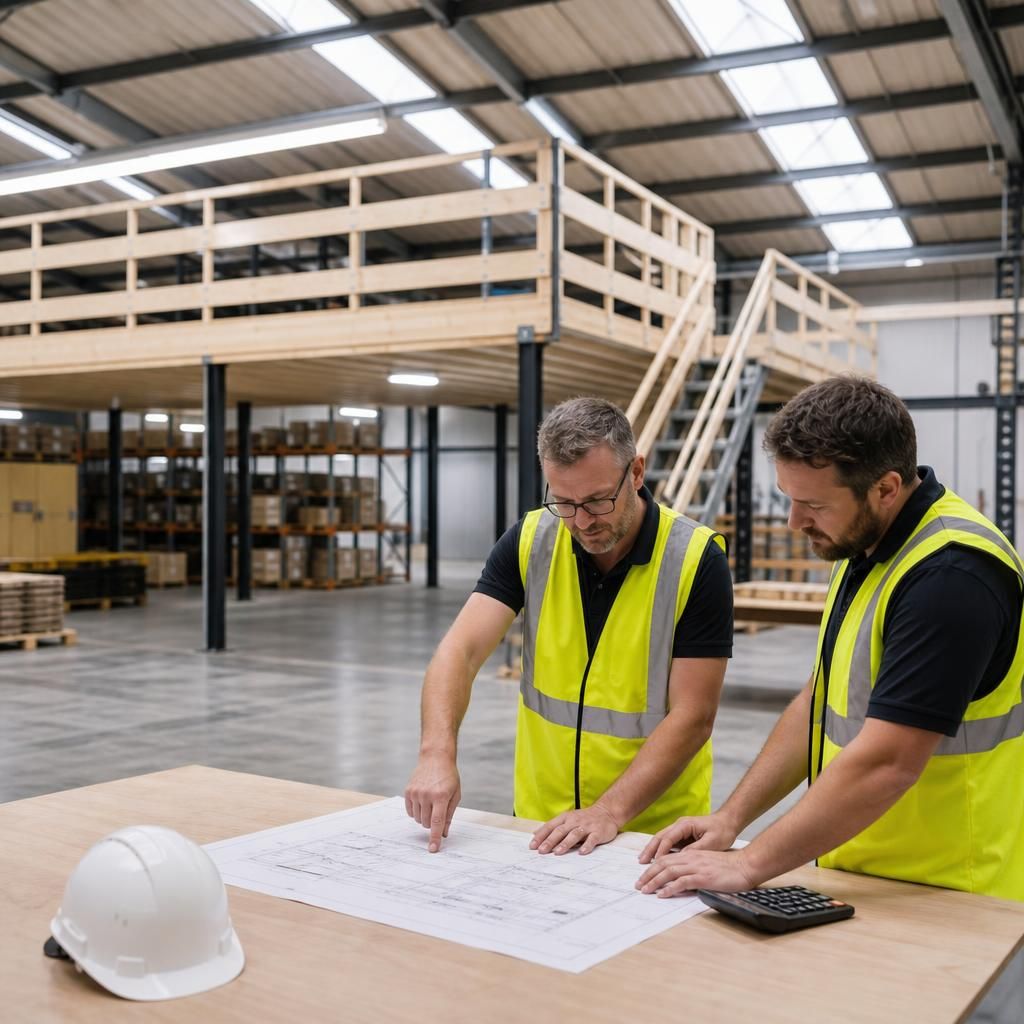
The main cost difference between timber and portable mezzanines is often found over their service life rather than in the initial quotation. Timber can be more economical for a permanent platform with a straightforward design, while a portable system may offer better value where the layout, use or location could change.
When comparing options, include design, site preparation, installation, access equipment, guarding, maintenance, alterations and future relocation. A portable mezzanine may cost more to purchase, but its demountable components can reduce the expense of adapting or replacing the platform if your operational requirements change. A site-specific assessment helps identify which solution provides the lower overall cost for the intended period of use.
Compare the costs of your mezzanine options
Contact Able Racking to discuss your timber or portable mezzanine requirements and arrange a site-specific assessment of the design, installation conditions and likely lifecycle costs.