
What is the process involved in a SEMA racking inspection?
A SEMA warehouse racking inspection involves preparing site information, examining the storage system for damage and safety risks, and recording the findings in a detailed inspection report. The inspector then classifies defects by urgency and recommends immediate action, monitoring or planned repair to help maintain a safe, compliant warehouse.
A SEMA warehouse racking inspection follows a structured process: the inspector reviews the relevant site information, examines the storage system and surrounding conditions, records defects, classifies risks by urgency, and issues a report with recommended corrective actions. The inspection is a visual and practical assessment intended to identify damage, unsafe conditions and changes that could affect the safe use of warehouse racking.
SEMA guidance supports regular inspections by a technically competent person. The inspection does not replace the daily checks carried out by warehouse staff or the need to follow the racking manufacturer’s instructions, workplace procedures and applicable health and safety requirements.
1. Preparing for the inspection
Before attending site, the inspector gathers information needed to understand the warehouse racking installation and its use. This may include:
- Previous warehouse racking inspection reports and outstanding recommendations.
- Layout drawings, installation information and manufacturer’s guidance where available.
- Details of the loads stored, pallet types and loading arrangements.
- Known damage, operational incidents, repairs or alterations.
- Information about changes to the warehouse layout, handling equipment or working practices.
The site contact will normally explain any areas of concern and provide access to all relevant warehouse racking aisles, loading areas and associated equipment. Where possible, the inspection should take place during normal operating conditions so that the inspector can assess how the system is being used. Safe access and suitable arrangements must be in place, and the inspection may require certain aisles or bays to be temporarily kept clear.
2. Confirming the scope and identifying the installation
The inspector establishes which warehouse racking is included in the inspection and checks that the system can be clearly identified. This helps prevent areas, elevations or isolated runs from being missed. The inspector also considers whether the installation appears to match its intended use, including the type of pallets, loading configuration, working clearances and material-handling equipment operating nearby.
Load notices and other safety information are checked to establish whether the stated capacities and operating instructions are visible, current and appropriate. If the information is missing, damaged or inconsistent with the installation, this is recorded for further investigation.
3. Carrying out the visual inspection
The inspector examines accessible parts of the warehouse racking and looks for damage, deterioration, instability, incorrect use and conditions that could increase risk. The inspection commonly covers:
- Uprights, frames, bracing and baseplates for impact damage, distortion, corrosion or movement.
- Beams, connectors, locking devices and supports for bending, displacement, damage or signs of insecure engagement.
- Anchors, shims, floor condition and the apparent stability of the installation.
- Column guards, frame protection and other protective measures for damage or poor positioning.
- Pallets, loads and load placement for overhang, instability, uneven distribution or inappropriate loading.
- Clearances between loads, warehouse racking components, vehicles, walkways and adjacent structures.
- Evidence of unauthorised alterations, missing components, incompatible replacement parts or changes to the original configuration.
- Housekeeping, obstructions, debris and working practices that may create a collision or access hazard.
- Signs of corrosion, wear, impact or environmental conditions that could affect the performance of the storage system.
The inspector considers both individual defects and their combined effect. For example, a damaged upright may present a greater risk where the frame is heavily loaded, protection is absent, or the damage is located close to a busy vehicle route. Photographs, measurements and notes may be taken to support the findings and make subsequent repairs easier to plan.
4. Assessing and classifying defects
Findings are assessed according to their likely effect on the safe use of the warehouse racking. SEMA inspection reporting commonly uses risk categories to distinguish defects requiring immediate action from those requiring planned attention or continued monitoring.
- Red risk: a serious risk requiring the affected area to be taken out of use immediately. Loads should be unloaded where it is safe to do so, and the area should remain isolated until suitable remedial work has been completed and the system is confirmed as safe.
- Amber risk: a hazardous defect requiring prompt attention. The inspector will normally recommend corrective action within an appropriate timescale, with the area monitored and controlled while the work is arranged.
- Green risk: a lower-risk issue that should be monitored and addressed through planned maintenance or routine management controls.
The category applied depends on the location, severity and nature of the defect, as well as the loading and operating conditions. The inspector should explain any immediate restrictions clearly to the responsible person rather than relying on the written report alone.
5. Producing the inspection report
Following the site inspection, the findings are compiled into a report. A useful SEMA warehouse racking inspection report normally identifies the areas inspected, records the condition observed and explains the action required. It may include photographs, marked-up layouts, defect references and details of any areas that could not be accessed.
The report should distinguish between damage that requires immediate isolation, defects requiring planned repair and lower-risk observations that need monitoring. It should also make clear where further information, technical assessment or confirmation from the manufacturer may be necessary. The report is not simply a list of faults; it provides a practical record that allows the responsible person to prioritise corrective work and demonstrate that inspection findings are being managed.
6. Taking corrective action
The warehouse operator or person responsible for the storage equipment must act on the findings. Depending on the defect, corrective action may involve isolating a bay, unloading affected positions, replacing damaged components, repairing protection, correcting loading practices, improving housekeeping or updating safety information.
Repairs should be carried out by suitably competent personnel using compatible components and an appropriate method. Damaged warehouse racking should not be altered, straightened or improvised without proper technical advice. Once remedial work is complete, the affected area should be checked before it is returned to service. A follow-up inspection may be appropriate where the original finding was serious, where repairs have changed the system, or where the report specifically requires verification.
7. Reviewing the result and preventing repeat defects
The inspection process should feed into the warehouse’s wider safety arrangements. Recurring impact damage may indicate that vehicle routes, clearances, protection, training or traffic management need to be reviewed. Repeated loading problems may require clearer load notices, revised procedures or additional staff instruction.
Daily checks by trained warehouse staff remain important between formal inspections. Staff should report damage or unsafe conditions as soon as they are found, prevent the affected area from being used where necessary, and ensure that reported defects are recorded and followed through. Keeping inspection reports, repair records and follow-up evidence together provides a clear maintenance history for the warehouse racking.
In practice, a SEMA inspection is most effective when it combines a competent visual assessment with accurate site information, clear risk classification and prompt action. The inspection identifies the condition of the warehouse racking at the time of assessment; maintaining safety afterwards depends on controlling use, completing repairs correctly and continuing routine checks.
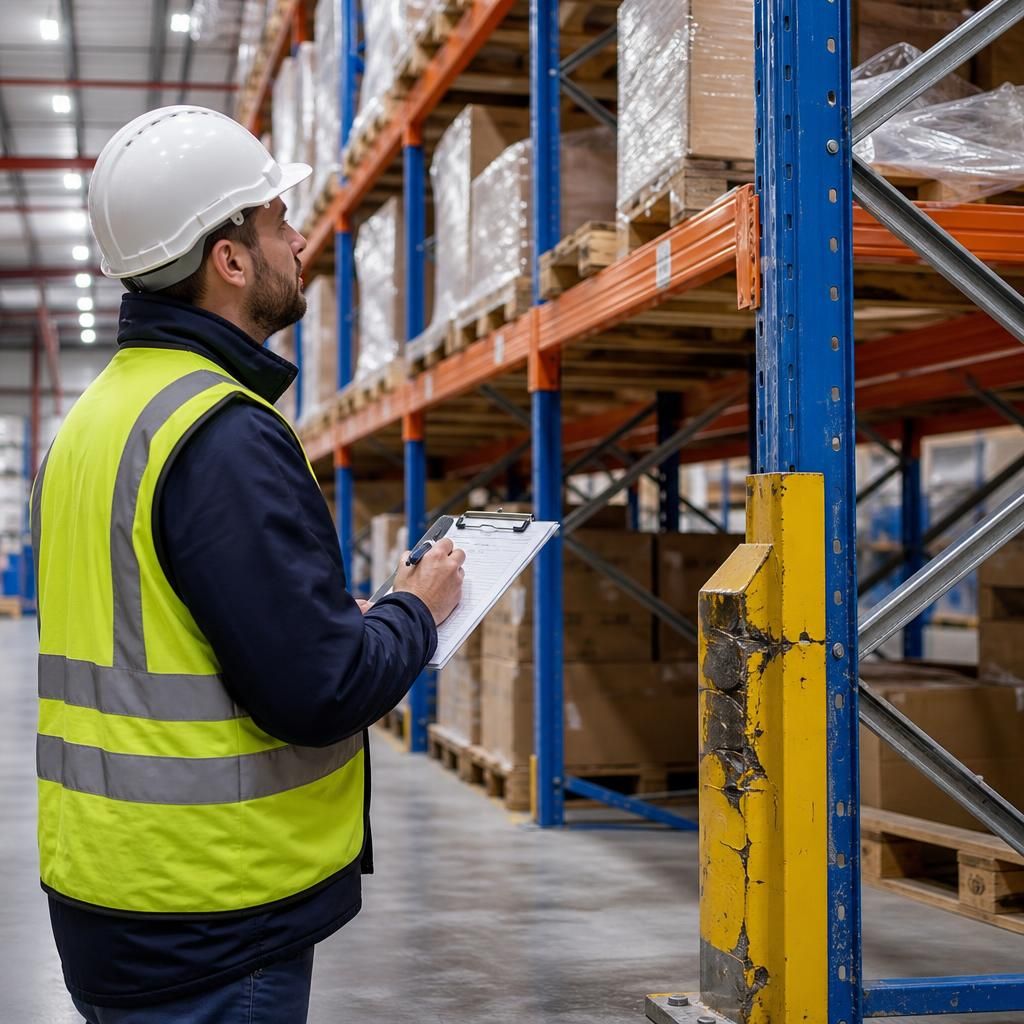
A SEMA warehouse racking inspection report records the condition of the storage system, identifies defects and sets out the action required. Findings should be clearly classified so the person responsible can distinguish areas requiring immediate isolation from defects suitable for prompt repair or planned monitoring.
The report should be used alongside the inspector’s explanation and site procedures. Red-risk damage normally requires the affected area to be taken out of use until remedial work is completed, while amber and green findings still need to be managed within the timescales stated. Keeping the report with repair records and follow-up checks provides a clear record that identified warehouse racking risks have been addressed.
Arrange Your SEMA Racking Inspection
Arrange your SEMA warehouse racking inspection with Able Racking to identify defects, classify risks and receive clear recommendations for corrective action. Contact our team to discuss your inspection requirements and suitable next steps.