
What are the benefits of SEMA racking inspection training courses?
SEMA racking inspection training courses equip your team to identify hazards, assess damage and apply recognised inspection procedures in line with industry guidance. This supports safer warehouse operations, stronger compliance, earlier repairs and better control of maintenance costs.
SEMA racking inspection training courses give suitable members of your team the knowledge to identify damage, recognise unsafe conditions and follow a consistent inspection process based on recognised industry guidance. The main benefits are safer warehouse operations, earlier intervention, clearer compliance arrangements and better control of repair and maintenance decisions.
Training does not remove the need for competent independent inspections where these are required, and completing a course does not automatically make someone a SEMA-approved inspector. It does, however, help your organisation develop informed personnel who can support day-to-day safety, report concerns accurately and work effectively with qualified inspection providers.
Improved hazard identification
Warehouse racking can be damaged by forklift impact, overloading, incorrect loading, poor housekeeping or changes to the storage layout. Training helps personnel recognise issues that may otherwise be missed, including:
- Damaged uprights, beams, bracing, protection and other structural components.
- Displaced, missing or unsuitable locking devices.
- Loads that are unstable, incorrectly positioned or above the permitted capacity.
- Signs of overloading, deflection or unauthorised alterations.
- Obstructions, poor access arrangements and unsafe working practices around the installation.
Understanding the difference between minor, moderate and serious damage allows concerns to be escalated more appropriately. This supports prompt action where a storage system may need unloading, isolation or repair.
More consistent inspection procedures
A trained person is more likely to inspect systematically rather than relying on a quick visual check. SEMA racking inspection training commonly covers the purpose of inspections, the types of damage that can occur, risk-based assessment and the information that should be recorded. This gives your team a consistent method for checking warehouse racking and communicating findings.
Consistency is particularly important when several people are involved in warehouse safety. Clear inspection routines help ensure that defects are reported in a comparable way, follow-up actions are not overlooked and recurring problems can be identified.
Earlier reporting and repairs
Training can shorten the time between damage occurring and corrective action being taken. Employees who understand what to look for are better placed to report a problem when it is first noticed, rather than waiting for damage to become more severe. Accurate reports can also help a competent repair team understand the location, component and apparent nature of the issue before attending site.
Early reporting may reduce disruption to warehouse operations and help prevent avoidable damage to stock, equipment or the structure. Any serious or uncertain defect should be controlled promptly and assessed by a suitably competent person.
Stronger support for legal and health and safety duties
Employers must take reasonably practicable steps to protect people using or working near warehouse racking. Training supports this duty by helping staff understand their responsibilities, inspection arrangements and the actions required when a defect is found.
It also helps demonstrate that your organisation has taken a planned approach to racking safety. Training records, inspection findings, repair documentation and evidence of follow-up can all contribute to a clearer safety management system. The course should form part of that system rather than being treated as a substitute for suitable inspections, maintenance or risk assessments.
Better understanding of load capacity and safe use
Inspection training helps personnel connect the condition of an installation with how it is being used. This includes recognising the importance of visible load notices, approved configurations, correct loading practices and maintaining clearances. Staff can then identify when the way warehouse racking is being used differs from its intended design or agreed operating limits.
Where a layout, load type or component has changed, the matter should be reviewed by a suitably qualified person before the installation is used in the revised arrangement. Training helps employees recognise when a question requires escalation instead of making an unsafe assumption.
More effective communication across the warehouse
A shared understanding of racking terminology and damage categories improves communication between warehouse managers, operators, maintenance staff, contractors and inspection providers. Reports are more useful when they identify the affected location and component clearly, describe the observed damage and state what immediate control has been applied.
This can make handovers more reliable and reduce confusion about whether an issue has been reported, made safe, repaired or awaiting verification. It also gives managers a better basis for reviewing repeated impact points, training needs and changes to warehouse traffic management.
Potential cost control through preventative care
Training cannot eliminate damage, but it can support preventative maintenance. Prompt identification of defects may help avoid more extensive repairs and reduce the likelihood of unplanned operational interruption. Inspection findings can also highlight patterns, such as repeated vehicle impacts or loading errors, allowing the underlying cause to be addressed.
The financial benefit should not be considered in isolation. A decision to delay action on a damaged installation can increase safety risks and may lead to greater repair requirements. The correct response is always based on the severity and location of the defect, the loads involved and the advice of a competent person.
Greater confidence for internal inspection roles
For businesses that appoint trained employees to carry out routine visual checks, a suitable course provides a structured foundation for that role. It clarifies what the employee is expected to observe, how concerns should be recorded and when the issue must be referred to an external or more highly qualified inspector.
The organisation should still confirm that the individual is suitable for the task, understands the site-specific risks and receives any additional instruction needed for the particular warehouse racking systems in use. Refresher training may also be appropriate when equipment, layouts, procedures or responsibilities change.
How to get the most from the training
- Choose a course that matches the responsibilities of the people attending.
- Make sure attendees understand the limits of their role and when to escalate a concern.
- Apply the learning to your own inspection, reporting and isolation procedures.
- Keep training records and review competence periodically.
- Combine internal checks with the planned thorough inspections required for your installation and operating conditions.
- Use inspection findings to address repeated damage, poor loading practices and other underlying causes.
For most warehouse operators, the value of SEMA racking inspection training lies in turning general awareness into a repeatable safety process. It helps the right people recognise problems earlier, record them more accurately and take appropriate action, while qualified inspectors and repair specialists provide the independent assessment and technical support that more complex issues require.
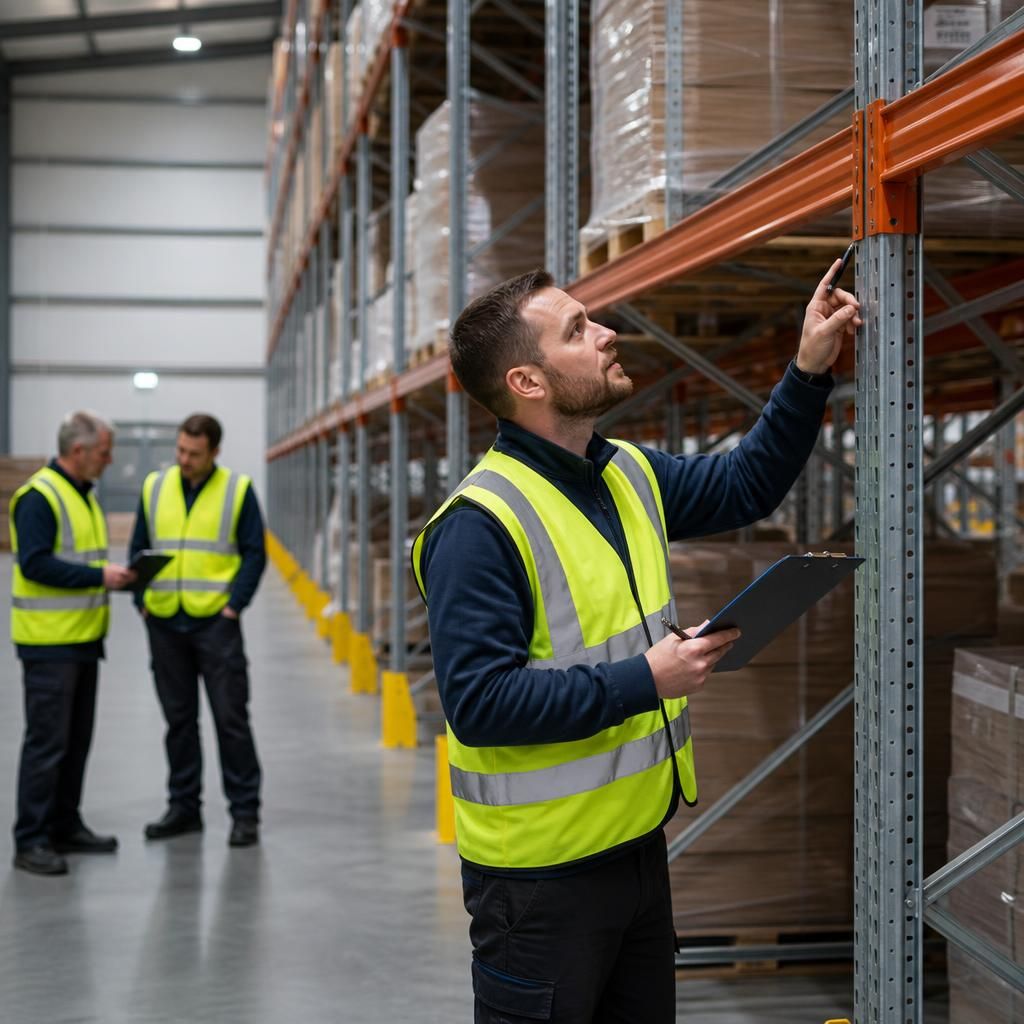
SEMA racking inspection training helps warehouse personnel identify damage and unsafe conditions before they develop into more serious safety or operational problems. It provides a consistent method for checking warehouse racking, recording findings and escalating defects to a suitably competent person.
Training can improve the recognition of issues such as impact damage, displaced locking devices, overloaded beams, unstable loads and unauthorised changes to the installation. Staff are also better prepared to distinguish between conditions requiring routine attention and defects that may require immediate isolation or unloading.
This supports earlier reporting and more accurate communication with managers, repair teams and qualified inspectors. The training complements planned thorough inspections and does not, by itself, make an attendee a SEMA-approved inspector.
Book SEMA racking inspection training for your team
Book SEMA racking inspection training for your team to strengthen internal safety checks, improve defect reporting and support compliant warehouse operations. Contact Able Racking to discuss the most suitable course for your staff and responsibilities.