
What are the key components of a thorough warehouse racking inspection?
A thorough warehouse racking inspection combines a visual check of frames, beams, connections, guards and load notices with an assessment of damage, stability, overloading, layout changes and safe operating practices. It should also record findings clearly, classify any hazards, recommend corrective action and confirm that the installation is being used and maintained in line with manufacturer guidance and applicable safety requirements.
A thorough warehouse racking inspection is a structured assessment of the storage system, its condition, its use and the surrounding working area. It should identify damage, instability, overloading, unsuitable alterations and unsafe working practices, then record each finding clearly with an appropriate risk classification and corrective action.
A competent inspector should assess the following components.
- Inspection scope and preparation: The inspection should cover all accessible warehouse racking, including frames, beams, bracing, connections, protection equipment, load notices and any associated components. Before starting, the inspector should review available layout drawings, previous inspection reports, repair records, manufacturer information and details of any changes to the installation or operating environment.
- Upright frames and bracing: Uprights should be checked for bends, dents, twists, splits, corrosion, missing components and signs that the frame has moved from its intended position. Horizontal and diagonal bracing should be secure, correctly fitted and free from damage. Baseplates, floor fixings and the condition of the supporting floor should also be examined, as movement or inadequate anchorage can affect overall stability.
- Beams and beam connections: Beams should be inspected for impact damage, bending, distortion, cracking, corrosion and signs of overloading. The inspector should confirm that beam connectors are fully engaged, locking pins or safety devices are present and correctly fitted, and that beams have not been displaced from their designed positions. Any alteration that changes beam levels or configuration should be checked against the approved design and load information.
- Protection and safety equipment: Column guards, end-of-aisle protection, barrier systems, row spacers and other protective equipment should be checked for damage, secure fixing and suitability for the traffic in the area. Protection that has been damaged may no longer provide adequate defence against forklift impact and should not be treated as a cosmetic issue.
- Load capacity and storage practices: The inspection should compare the actual loads and storage arrangements with the stated capacity of the system. This includes checking that load notices are present, legible and positioned where operators can see them. The inspector should look for unevenly distributed loads, excessive pallet overhang, unsupported pallets, unsuitable pallet types, loads placed outside the intended beam levels and goods stored in a way that could fall or obstruct access.
- Damage classification: Damage should be assessed according to its location, severity and potential effect on safety. A thorough report should distinguish between observations that require monitoring, defects requiring prompt attention and serious hazards requiring the affected area or bay to be taken out of use until suitable action is completed. The classification should be based on the condition observed and relevant technical guidance, rather than on appearance alone.
- Floor, aisle and operating conditions: The surrounding area should be reviewed for damaged or uneven flooring, obstructions, poor housekeeping, inadequate clearance and conditions that could increase the likelihood of impact. Traffic routes, pedestrian interfaces and forklift operating practices should be considered because repeated contact with the installation may indicate a wider control problem rather than an isolated defect.
- Stability and alignment: The inspector should consider whether the installation remains plumb, level, aligned and securely fixed. Evidence of settlement, movement, leaning, displaced frames or changes in aisle width should be recorded and investigated. The inspection should also consider whether nearby building work, changes in floor conditions or alterations to traffic routes could have affected stability.
- Changes and unauthorised modifications: Components should be checked against the available design information or installation records. Missing bracing, substituted components, removed protection, altered beam positions and unapproved extensions can change the system’s capacity and behaviour. Any modification without supporting technical information should be treated as requiring further assessment before continued use.
- Housekeeping and safe operation: The inspector should observe how the warehouse racking is being used, including loading and unloading, forklift movements, pallet placement and access to inspection points. Unsafe practices such as climbing on beams, placing damaged pallets into storage or leaving goods protruding into aisles should be recorded alongside the physical defects they may cause.
- Fire and emergency considerations: The inspection should identify blocked escape routes, obstructed firefighting equipment, damaged fire-related protection and storage arrangements that could interfere with emergency access. Fire precautions and building-specific requirements may need to be reviewed with the responsible person or a suitably qualified specialist.
The report should provide a clear record of what was inspected, when it was inspected, who carried out the inspection and which areas were inaccessible, if any. Findings should identify the precise location of each defect, describe the observed condition, include supporting photographs where useful and state the recommended action. Vague entries such as “damaged bay” are less useful than a location-specific description that enables the repair team to find and address the problem.
Corrective actions should be proportionate to the risk. Depending on the finding, this may involve removing a damaged component from service, unloading an affected bay, installing temporary controls, arranging an approved repair or obtaining a technical assessment. Repairs should use suitable components and follow the system manufacturer’s requirements or an appropriately engineered method. Straightening or welding damaged structural components without technical approval may not restore their original capacity.
A complete inspection also includes verification after remedial work. The repaired area should be rechecked, outstanding actions should be tracked to completion and updated records should be retained. Where recurring impact damage, overloading or poor loading practices are identified, the solution should address the underlying cause through operator instruction, traffic controls, protection improvements or refresher training.
Warehouse racking inspections form part of an ongoing safety management process rather than a one-off visual exercise. Routine user checks, formal internal inspections and periodic inspections by a technically competent person should work together, with the inspection frequency determined by the risk, operating conditions, manufacturer’s guidance and applicable HSE requirements. A competent inspection provides the evidence needed to maintain the installation safely, but it does not replace prompt reporting of damage between scheduled inspections.
For reliable results, the inspector should combine practical experience with knowledge of storage system design, damage assessment, safe loading, workplace transport risks and relevant guidance. Able Racking can use the findings to explain the priority of each issue, support practical remedial planning and help ensure that warehouse racking remains suitable for the way it is being used.
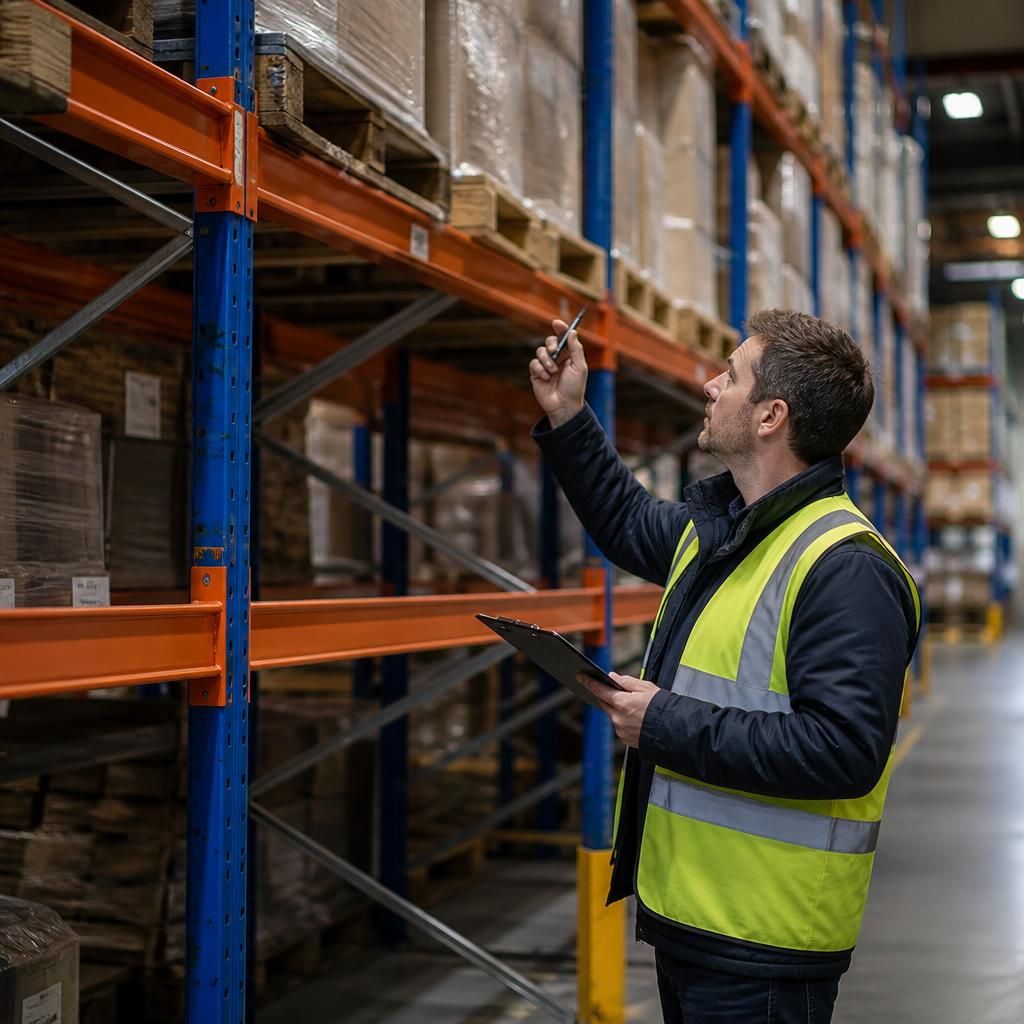
A thorough warehouse racking inspection must classify every defect according to its severity and potential effect on safety, not simply record that damage is present. The report should identify the exact location, describe the condition observed and state whether the area can remain in use while corrective action is arranged.
Findings should be prioritised so that serious hazards, such as severely damaged uprights, displaced beams or instability, are isolated and unloaded where necessary. Less urgent defects may require monitoring or planned repair, but they should still be recorded and tracked to completion. Photographs, bay references and clear recommendations help repair teams take the correct action.
After repairs, the affected area should be rechecked and the inspection record updated. Where the same damage occurs repeatedly, the underlying cause should also be considered, such as forklift impact, unsuitable loading practices or inadequate protection.
Book Your Warehouse Racking Inspection
Book your warehouse racking inspection with Able Racking for a clear assessment of damage, stability, loading practices and compliance. Contact our expert team to arrange a suitable inspection.