
When is professional warehouse racking installation support needed?
Professional warehouse racking installation support is needed when a new storage system is being installed, an existing layout or load capacity is changing, or equipment is being relocated or extended. Expert support helps ensure the system is correctly designed, installed, anchored and assessed for safe use in line with manufacturer guidance and applicable workplace safety requirements.
Professional warehouse racking installation support is needed whenever a storage system is being introduced, altered, extended, relocated or reinstated after significant damage. Competent installation support helps confirm that the warehouse racking is suitable for the intended loads and layout, assembled correctly, securely anchored where required, and ready for safe use in accordance with the design, manufacturer’s instructions and applicable workplace safety requirements.
New warehouse racking installations
New warehouse racking should be installed by experienced operatives who understand the system design and the conditions within the warehouse. Installation is not simply a matter of assembling frames and beams. The work may involve checking the floor, setting out the layout, installing protective components, fixing the system correctly and confirming that the finished arrangement matches the approved design.
Professional support is particularly important where the installation includes different bay configurations, unusual load requirements, narrow operating clearances, specialised handling equipment or interfaces with other warehouse systems. Errors in positioning, connection, bracing or anchoring can affect the stability and load capacity of the completed installation.
Changes to loads, products or storage methods
Installation support is needed when the proposed stored loads are heavier, larger, taller or shaped differently from those previously accommodated. Changing from one pallet type to another, increasing beam levels or introducing new handling equipment can alter the forces applied to the structure and the clearances required for safe operation.
A professional assessment can establish whether the existing warehouse racking can be adapted safely or whether components, frames, beams or protection need to be added or replaced. The load notices and other system information should also remain accurate after any change.
Layout changes, extensions and relocations
Moving warehouse racking to create additional aisles, changing bay positions or extending an existing run should not be treated as a straightforward rearrangement. The revised layout may affect aisle widths, traffic routes, emergency access, sprinkler clearances, lighting, floor conditions and the relationship between adjoining sections.
Professional installation support ensures that extensions are compatible with the existing system and that relocated components are checked before reuse. Components that have been bent, cut, modified, heavily corroded or otherwise compromised should not be incorporated into the revised installation without suitable technical advice.
After impact, damage or an unplanned alteration
Where warehouse racking has been struck by a forklift or other handling equipment, the affected area should be isolated and assessed before it is returned to service. If components need replacing or a section needs to be dismantled and rebuilt, installation support helps ensure that the repair work restores the system correctly rather than leaving hidden alignment or connection problems.
The same applies where warehouse racking has been dismantled, modified by untrained personnel or altered without an up-to-date design. A follow-up inspection or handover assessment may be appropriate once the work is complete, particularly where the original configuration or load information is no longer clear.
When the original design information is missing
Installation support should be obtained if there are no reliable drawings, load data, manufacturer’s instructions or records showing how the warehouse racking was intended to be assembled. Guessing the capacity of beams or frames, mixing components from different systems or relying on appearance alone can result in an unsafe installation.
An experienced specialist can document the existing arrangement, identify what information is available and advise on the checks needed before the system is used. Where necessary, the storage arrangement may need technical verification before a safe working load can be confirmed.
What professional installation support should cover
- Reviewing the proposed layout, load requirements and available system information.
- Checking that the floor, access arrangements and working area are suitable for the installation.
- Setting out frames, beams, bracing and accessories in accordance with the design.
- Installing anchors, safety components and protection where specified.
- Checking connections, alignment, plumbness, clearances and component condition.
- Managing the work area to reduce risks to warehouse staff and other contractors.
- Identifying any deviation from the design or manufacturer’s instructions before handover.
- Providing practical handover information, including load notices, restrictions and any recommended follow-up checks.
Installation work should be carried out by competent personnel with suitable experience of the particular warehouse racking system. The installation team should also be able to recognise when a design issue, damaged component or unusual site condition requires further technical input rather than being resolved by an improvised adjustment.
Installation support and ongoing safety checks
Correct installation does not remove the need for routine warehouse racking inspections and day-to-day reporting of damage. Warehouse conditions change, handling equipment can cause impacts and loads may be placed incorrectly over time. The completed installation should therefore be incorporated into the site’s inspection, reporting and maintenance arrangements.
Professional installation support is the appropriate choice whenever the work could affect structural stability, load capacity, clearances or the intended use of the system. If there is uncertainty about whether an existing arrangement can be extended, relocated or reused, obtain advice before work starts and before the warehouse racking is loaded.
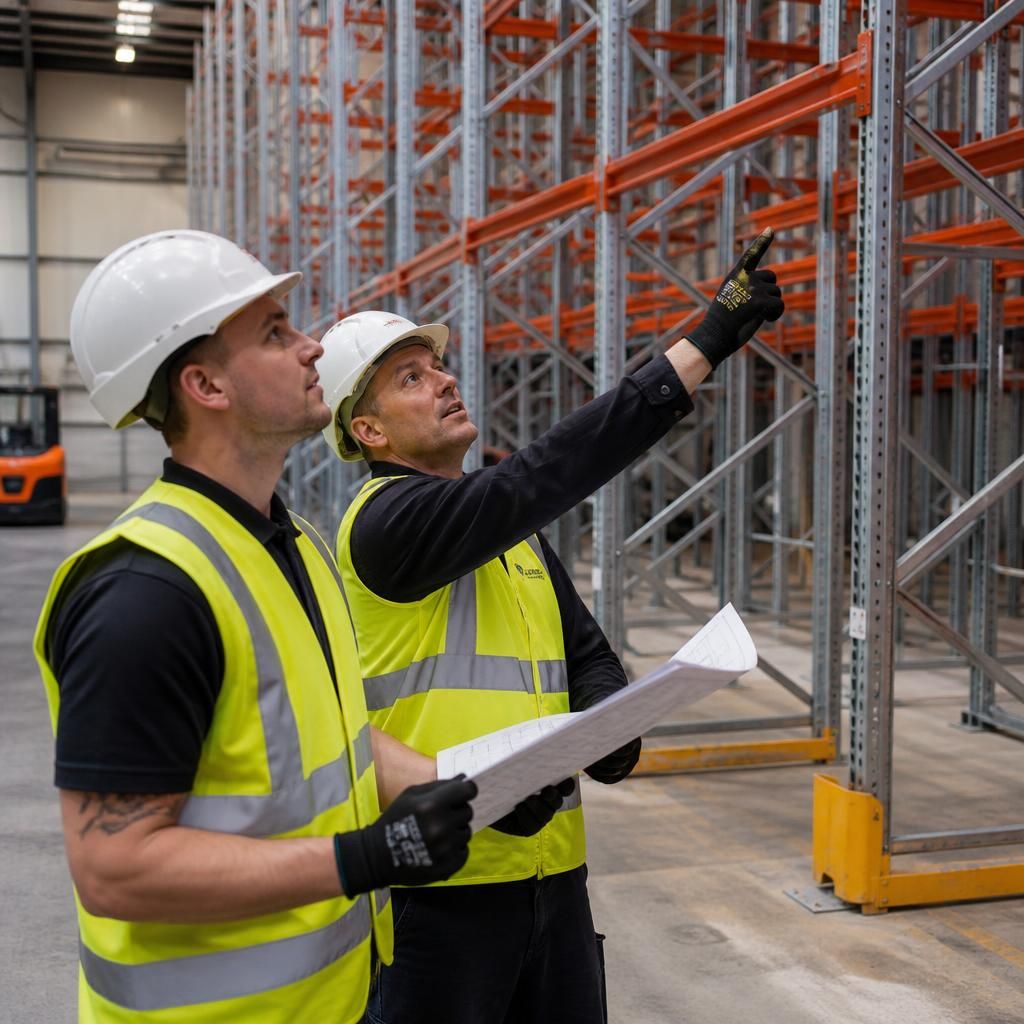
Professional warehouse racking installation support is needed whenever changes could affect the system’s stability, load capacity or safe clearances. This includes new installations, extensions, relocations and changes to stored products or handling equipment. An experienced installation team can check that the proposed arrangement matches the design, manufacturer’s instructions and conditions within the warehouse.
Support should include checking the floor and layout, positioning frames and beams accurately, fitting anchors and protection where required, and verifying connections, alignment and clearances before handover. It is also important after impact damage or an unplanned alteration, when components may need replacing or a section may need to be dismantled and rebuilt. If drawings, load information or manufacturer’s instructions are missing, seek professional advice before loading the warehouse racking. This helps prevent unsafe assumptions about component compatibility or capacity and provides a sound basis for ongoing inspections and maintenance.
Discuss Your Warehouse Racking Installation Requirements
Discuss your warehouse racking installation requirements with Able Racking before starting a new installation, extension, relocation or alteration. Our experienced team can advise on the proposed layout, loads and installation requirements to support a safe, compliant handover.