
What are the consequences of not maintaining warehouse racking systems regularly?
Not maintaining warehouse racking systems regularly can allow damage, loose components and load-related defects to worsen, increasing the risk of falling goods, structural failure, injuries and operational disruption. It can also lead to non-compliance, unplanned repair costs and reduced storage efficiency, which regular inspections and prompt corrective work help prevent.
Failing to maintain warehouse racking systems allows damage, loose components and load-related defects to develop unnoticed. The consequences can include falling goods, structural failure, serious injury, stock loss, operational disruption, unexpected repair costs and difficulty demonstrating compliance with workplace safety duties. Regular inspections, competent assessment and prompt corrective work reduce these risks and help keep warehouse racking safe and serviceable.
Damage can become progressively more serious
Minor impact damage is not necessarily harmless. A bent upright, damaged bracing member, displaced beam or distorted connector can reduce the designed strength and stability of a warehouse racking system. If the damage is left in place, further impacts, vibration, poor load placement or continued loading may worsen the defect.
Maintenance provides an opportunity to identify problems before they affect the wider structure. It should include visual checks, review of reported incidents and a suitable inspection by a competent person. Findings should be recorded clearly, with damaged areas assessed and repaired or taken out of service where necessary.
There is a greater risk of falling goods
Poorly maintained warehouse racking can become unstable or unable to support loads as intended. Damaged beams, missing safety pins, displaced components and inadequate protection can allow pallets or stored products to move, fall or collapse. Even where the main frame remains standing, falling goods can injure people, damage stock and obstruct access routes.
Good maintenance also checks the condition and position of load supports, safety components, pallet locations and protection systems. Loads should not be placed on damaged sections, and any area presenting an immediate danger should be clearly identified and isolated until suitable corrective work has been completed.
Structural failure can affect adjoining warehouse racking
A local defect may have wider consequences. Warehouse racking is a connected structure, so impact damage or overloading in one area can transfer stress to adjacent frames, beams and connections. A failure in one bay may destabilise nearby sections, particularly where loads are not distributed as designed or where components have been removed, altered or replaced incorrectly.
Regular maintenance helps identify patterns rather than isolated defects. Repeated forklift impacts, recurring damage at a particular aisle or signs of movement may indicate a need to review traffic management, operator practices, protection or the warehouse racking layout.
People may be exposed to avoidable hazards
Warehouse operatives, forklift drivers, contractors and visitors can all be placed at risk when maintenance is neglected. Hazards may include falling products, collapsing warehouse racking, obstructed escape routes, sharp damaged steelwork and unsafe access to stored goods. The risk is not limited to the person who caused an impact; anyone working or passing nearby may be affected.
Reported damage should therefore be treated as a safety issue rather than an ordinary maintenance request. Employees should know how to report defects, and supervisors should have a defined process for assessing the affected area, controlling access and arranging competent repairs.
Repair costs are likely to increase
Addressing a defect early is generally more straightforward than repairing damage after it has worsened. Neglected warehouse racking may require the replacement of several connected components, removal and relocation of stock, temporary loss of storage capacity or specialist structural assessment. A serious failure can also result in damaged goods, clean-up work, disrupted deliveries and extended downtime.
Preventative maintenance supports more predictable budgeting. It allows repairs to be planned around warehouse operations, helps identify recurring causes of damage and reduces the likelihood of urgent work being required during busy periods.
Warehouse operations can be disrupted
Unsafe warehouse racking may need to be unloaded or cordoned off without warning. This can reduce available storage locations, delay picking and replenishment, restrict forklift movements and affect delivery schedules. Where a larger section is involved, the disruption may extend beyond the original damaged bay.
Planned inspections and maintenance make it easier to manage these effects. Access can be arranged, stock can be moved safely where required and repairs can be prioritised according to the severity of the risk and the importance of the affected area.
Non-compliance may be harder to demonstrate
Employers are expected to manage workplace risks and maintain work equipment and storage systems in a safe condition. Neglecting warehouse racking maintenance can make it difficult to show that risks have been identified, defects have been controlled and corrective actions have been completed. Inadequate records may also make it unclear whether reported damage was assessed or whether repairs were carried out properly.
Inspection and maintenance records should be accurate, accessible and linked to the relevant warehouse racking locations. They should show the defect identified, the action required, the person responsible and whether the work has been completed. Records do not replace physical checks, but they provide useful evidence that the safety process is being managed consistently.
Storage efficiency and load control can deteriorate
Maintenance is not limited to repairing visibly damaged steelwork. It also helps confirm that warehouse racking remains suitable for its intended use. Changes in pallet dimensions, load weights, forklift equipment, operating methods or warehouse layout can affect the suitability of the system.
When these changes are not reviewed, loads may be placed incorrectly, load notices may no longer reflect the actual arrangement, or clearances may become inadequate. This can lead to overloading, poor load distribution and repeated contact with the structure. Maintaining the system includes checking that its use remains consistent with the design information and manufacturer’s requirements.
What should happen when a defect is found?
- Report the damage or concern immediately through the site’s established process.
- Prevent further loading or access where the defect could create an immediate risk.
- Arrange an assessment by a competent warehouse racking inspector or suitably qualified specialist.
- Unload or isolate the affected area if the assessment indicates that it is unsafe.
- Use appropriate replacement components and approved repair methods rather than improvised alterations.
- Reinspect the area after work is completed and update the maintenance record.
- Investigate the cause, such as forklift impact, poor load placement or unsuitable operating practice, to help prevent recurrence.
Warehouse racking inspections and maintenance should form part of a continuing safety process, not a response only after an incident. Routine checks by trained staff can identify obvious problems between formal inspections, while periodic inspections by a competent person provide a more detailed assessment of the system’s condition. The frequency should reflect the warehouse environment, usage, impact history and any changes to the installation.
Maintaining warehouse racking regularly protects people, stock and business continuity. It also gives site managers a clearer basis for controlling defects, planning repairs and demonstrating that the storage system is being managed responsibly. Where damage, movement or uncertainty is identified, the affected warehouse racking should not continue in normal use until it has been assessed and made safe.
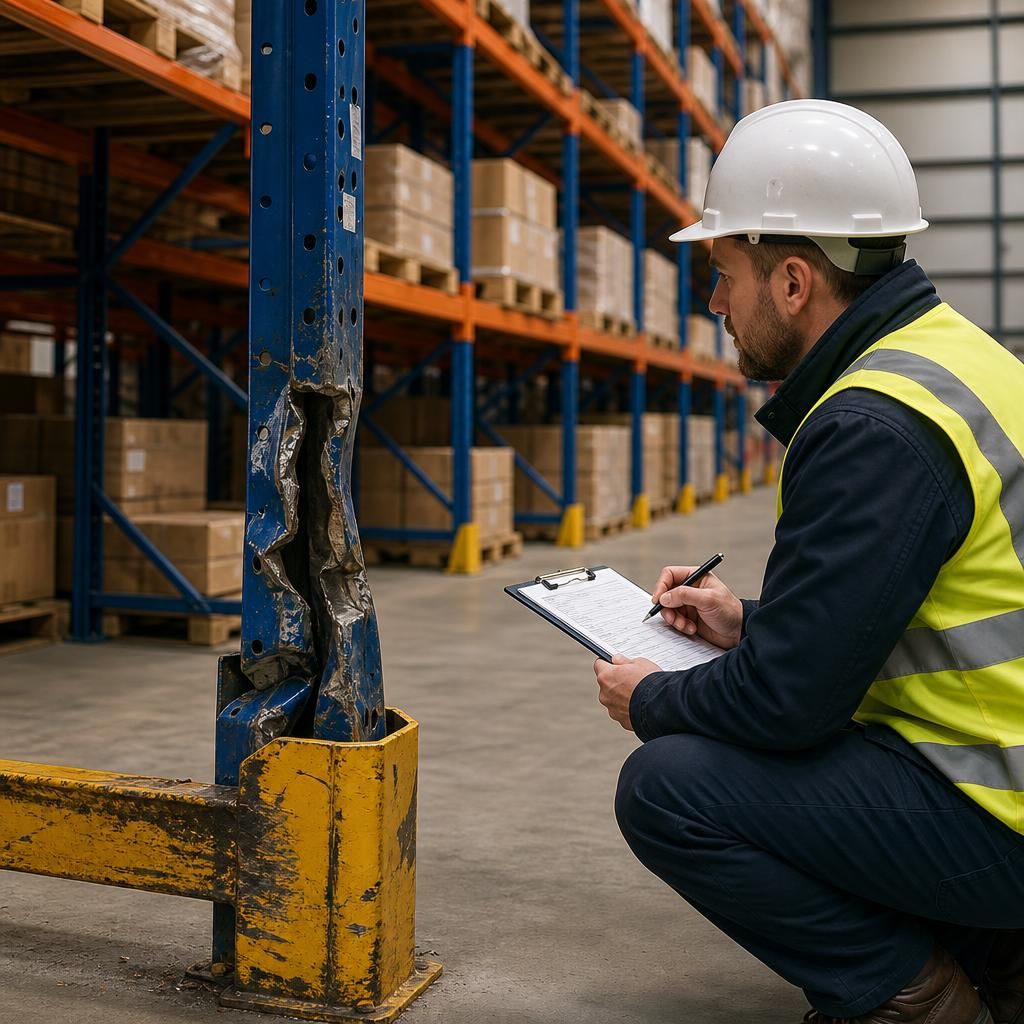
When damage is found, the affected warehouse racking should be assessed and controlled before normal use continues. A bent upright, displaced beam, missing safety pin or unstable load can worsen if the area remains loaded or exposed to further forklift contact.
Report the defect immediately, prevent access where necessary and arrange an assessment by a competent warehouse racking inspector. The area may need unloading, isolation or temporary removal from service. Repairs should use suitable approved components and methods, followed by a check that the warehouse racking is safe before it is returned to operation. Record the defect, action taken and completion of the work so that the site has a clear maintenance history.
Book a warehouse racking maintenance inspection
Book a warehouse racking maintenance inspection to identify damage, confirm safe operation and address defects before they disrupt your warehouse. Contact Able Racking to arrange a competent assessment.