
How can regular maintenance improve the safety of industrial warehouse racking systems?
Regular maintenance improves the safety of industrial warehouse racking systems by identifying damage, loose connections, corrosion, displaced components and other defects before they cause instability or failure. Prompt repairs, component replacement and documented checks help keep the system structurally sound, compliant with safety requirements and suitable for continued use.
Regular maintenance improves the safety of industrial warehouse racking systems by finding and correcting damage, loosened connections, corrosion, displaced components and other defects before they affect stability. It also confirms that the system remains suitable for its loads and operating conditions, supports compliance with the manufacturer’s instructions and relevant workplace safety duties, and provides a documented basis for taking corrective action.
It reduces the risk of progressive damage. A minor impact from handling equipment can bend an upright, dislodge a beam connection or damage a protection component without causing immediate collapse. If the defect is left untreated, continued loading, vibration and further impacts may increase the damage. Routine inspections allow problems to be isolated, assessed and repaired before they compromise a larger section of the installation.
Effective maintenance normally combines regular in-house checks with more detailed inspections by a suitably competent person. Warehouse staff should report visible damage, unusual movement, missing components and changes in the condition of the system as soon as they are noticed. A formal inspection should then assess the condition of the frames, beams, bracing, connections, baseplates, safety pins, clips, guards and other load-bearing or protective components.
Maintenance helps identify common safety defects, including:
- Damaged or bent uprights, beams and bracing members
- Loose, missing or incorrectly fitted safety pins, clips and locking components
- Impact damage caused by handling equipment or loading activities
- Corrosion, cracking, distortion or deterioration of components
- Unstable or damaged floor fixings, baseplates and protection systems
- Displaced beams, altered connection positions or unauthorised modifications
- Overloaded or incorrectly distributed storage positions
- Missing load notices or load information that no longer reflects the installation
Prompt repairs prevent unsafe equipment from remaining in service. When damage is found, the affected area should be assessed without delay. Depending on the severity, suitable action may include removing stock, restricting access, unloading a position, installing temporary controls or replacing the affected component. Damaged structural members should not be straightened, welded or altered without an appropriate technical assessment and an approved repair method. Unauthorised repairs can change the design performance of the system and create further risks.
Replacement components must be compatible with the existing warehouse racking system and installed in accordance with the manufacturer’s instructions or an appropriate engineering specification. Substituting parts based only on appearance or dimensions may affect connection strength, load capacity or the way forces are transferred through the structure. A competent specialist can determine whether a component can be repaired, must be replaced or requires a wider assessment of the installation.
Maintenance also protects load capacity. Industrial warehouse racking is designed to carry specified loads in defined positions. Damaged beams, altered beam levels, missing bracing or uneven loading can change how those loads are transferred through the structure. Regular checks help confirm that stored goods are within the stated limits, that load notices are accurate and that operators are not using damaged or unsuitable locations.
Good maintenance should therefore be linked to safe working practices. Operators need clear instructions on load placement, access, reporting damage and keeping aisles clear. Any changes to the layout, stored goods, handling equipment or working method should be reviewed before use, because a system that was suitable for its original arrangement may require a technical review after alteration.
Documented inspections make safety controls easier to manage. Records should identify the area inspected, the condition observed, any photographs or supporting information, the recommended action, the person responsible and the date of completion. A clear record helps site managers track recurring impact points, confirm that repairs have been completed and demonstrate that reported defects have not been overlooked.
Inspection findings are commonly prioritised according to the level of risk. An issue that could lead to immediate failure or injury may require the affected location to be unloaded and taken out of use until it has been made safe. Less serious damage may require monitoring and planned repair, but it should still be recorded and reviewed. The decision should be based on the condition of the component, its position, the loads involved and the potential consequences of further deterioration.
Preventative maintenance can also improve operational control. Well-maintained warehouse racking reduces disruption caused by emergency repairs, unplanned stock movements and restricted storage locations. It helps the site identify repeated causes of damage, such as poor aisle control, unsuitable handling practices or inadequate protection at vulnerable points. Addressing those causes is more effective than repeatedly replacing components without changing the conditions that caused the damage.
Maintenance does not replace safe design, correct installation, operator training or formal safety inspections. These controls work together: the system must be appropriately designed and installed, used within its stated limits, checked at suitable intervals and repaired using competent methods. A planned maintenance programme should reflect the site’s traffic levels, environment, operating practices, previous damage and the recommendations of the system manufacturer or technical adviser.
For existing customers, the practical approach is to report defects immediately, protect any affected location, arrange a competent assessment and retain a record of the outcome. Regular professional inspections, followed by properly specified repairs and follow-up checks, help keep industrial warehouse racking structurally sound, compliant and suitable for continued use.
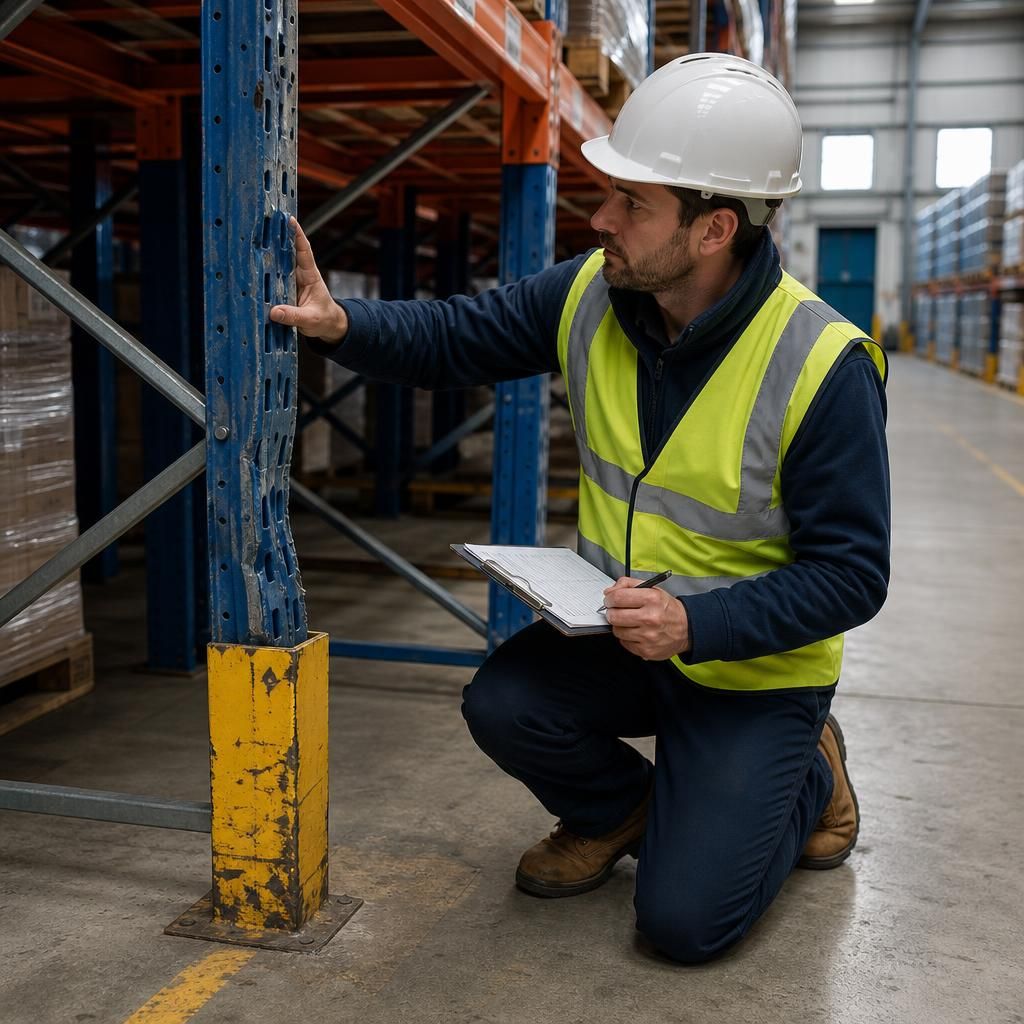
Regular maintenance improves warehouse racking safety by identifying damage and defects before they affect the stability of the structure. Bent uprights, displaced beams, loose connections, missing safety pins, damaged baseplates and corrosion should be assessed promptly rather than left in service.
When a defect is found, protect the affected location, restrict access where necessary and arrange a competent assessment. The appropriate action may include unloading the position, replacing a damaged component or completing an approved repair. Keeping a clear record of the finding and its resolution helps confirm that corrective work has been completed and supports ongoing compliance.
Book Your Warehouse Racking Maintenance Inspection
Arrange a professional warehouse racking maintenance inspection to identify defects, confirm corrective action and support continued compliance. Contact Able Racking to discuss your site’s inspection and repair requirements.